

Concrete driveway building
Tearing out a cracked or sunken driveway and pouring a new one on a dug-out, packed base, thick enough for the cars and trucks that park on it every day.
Monolith Toledo Concrete is a concrete contractor in Toledo, OH, pouring driveways, patios, walks, steps and garage floors and rebuilding sunken slabs for homeowners just across the state line in Lambertville, MI.
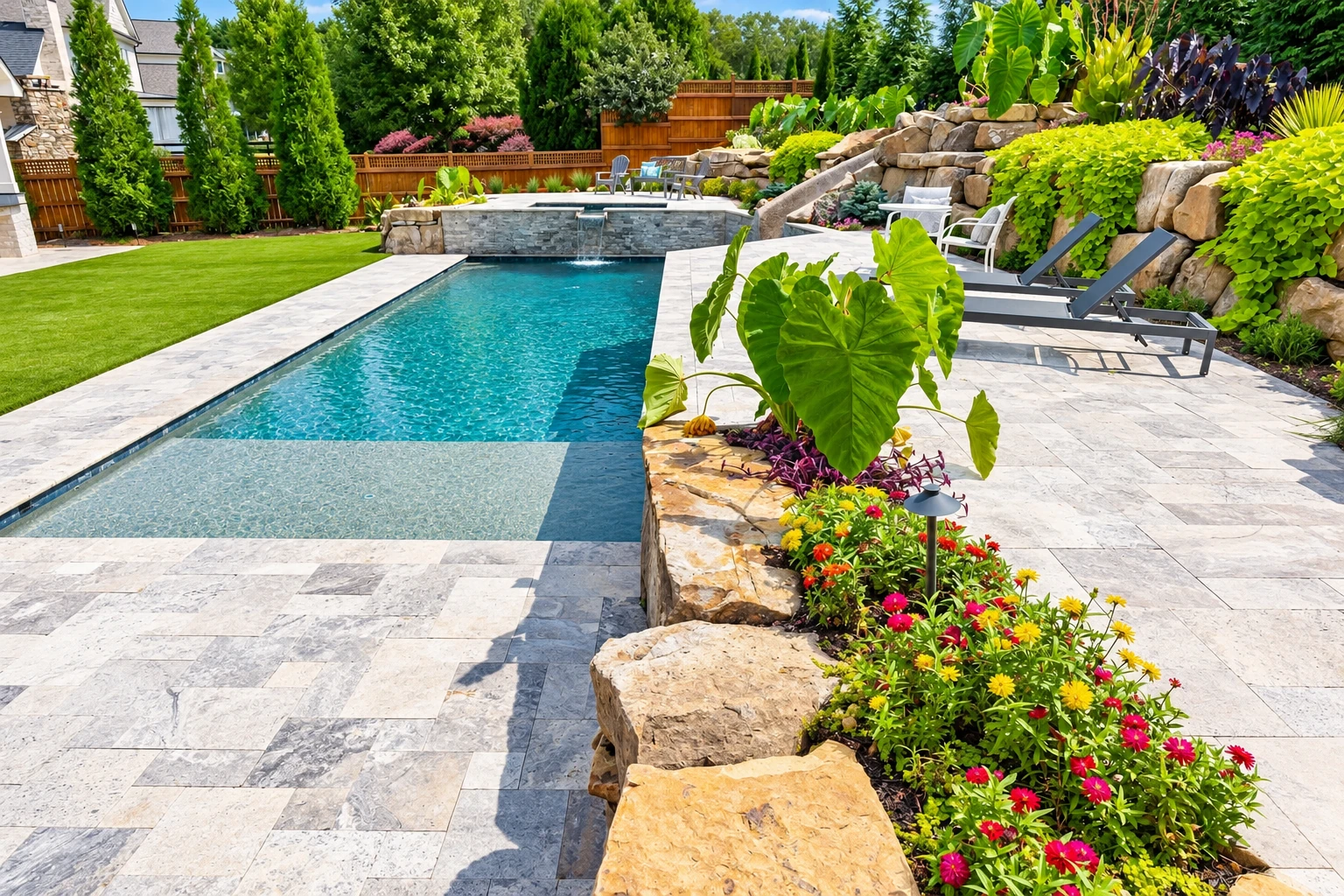
Lambertville isn't a city of its own. It's an unincorporated community inside Bedford Township, in southern Monroe County just north of the Ohio line, so your project falls under Michigan's rules and the township's, not Ohio's. We're based in Toledo and do the same work on both sides of the line, from Sylvania to Temperance. Most of the calls we get here are for driveways, patios, front walks and garage floors on family homes.
The price moves with the size and thickness of the slab, how much old concrete comes out, how much base work the ground needs and the finish you pick. The schedule turns on the permit, our calendar and curing, the days fresh concrete needs to harden before it takes weight. You'll get your own figure at the estimate. Most of the slabs we're called out to here didn't fail on top. They sank or tipped because the subgrade, what the slab sits on, was raked level instead of dug out and packed, so if the budget gets tight, I'll put the money into the base before a fancy finish.
I walk your job, measure it and write the estimate myself, and I'm on site with our crew when we pour, so the person who made the plan is there carrying it out.
Before we set forms, we look at how water runs across your lot and pitch the slab away from the house, because a slab that drains toward the foundation causes trouble for years.
We schedule pours to avoid the midday heat, because concrete finished in hot sun dries too fast on top and can turn weak and dusty a year or two later.
Tearing out a cracked or sunken driveway and pouring a new one on a dug-out, packed base, thick enough for the cars and trucks that park on it every day.
Backyard patios sized for how you'll actually use them, pitched so rain runs toward the yard instead of the house, with a broom finish that gives bare feet some grip.
Patterns that look like stone, brick or slate, pressed into fresh concrete and colored, for patios and walks where you want more than a plain gray slab out back.
Front walks and side paths without trip edges, replacing heaved or broken sections and setting new walks with joints cut where we want any cracks to go.
New and replacement garage slabs poured over a packed base and sloped toward the door, so water dripping off the car runs out instead of under your shelves.
Colored, textured and bordered finishes that dress up a plain slab, which we talk through at the estimate so the look fits the house and the budget you set.
Poured walls that hold back a slope or a raised bed, set on footings with drainage behind them so built-up water doesn't push the wall out of line.
Interior floors for basements, workshops and additions, poured level over a prepared base so the floor sits flat for whatever tile, carpet or equipment goes on top later.
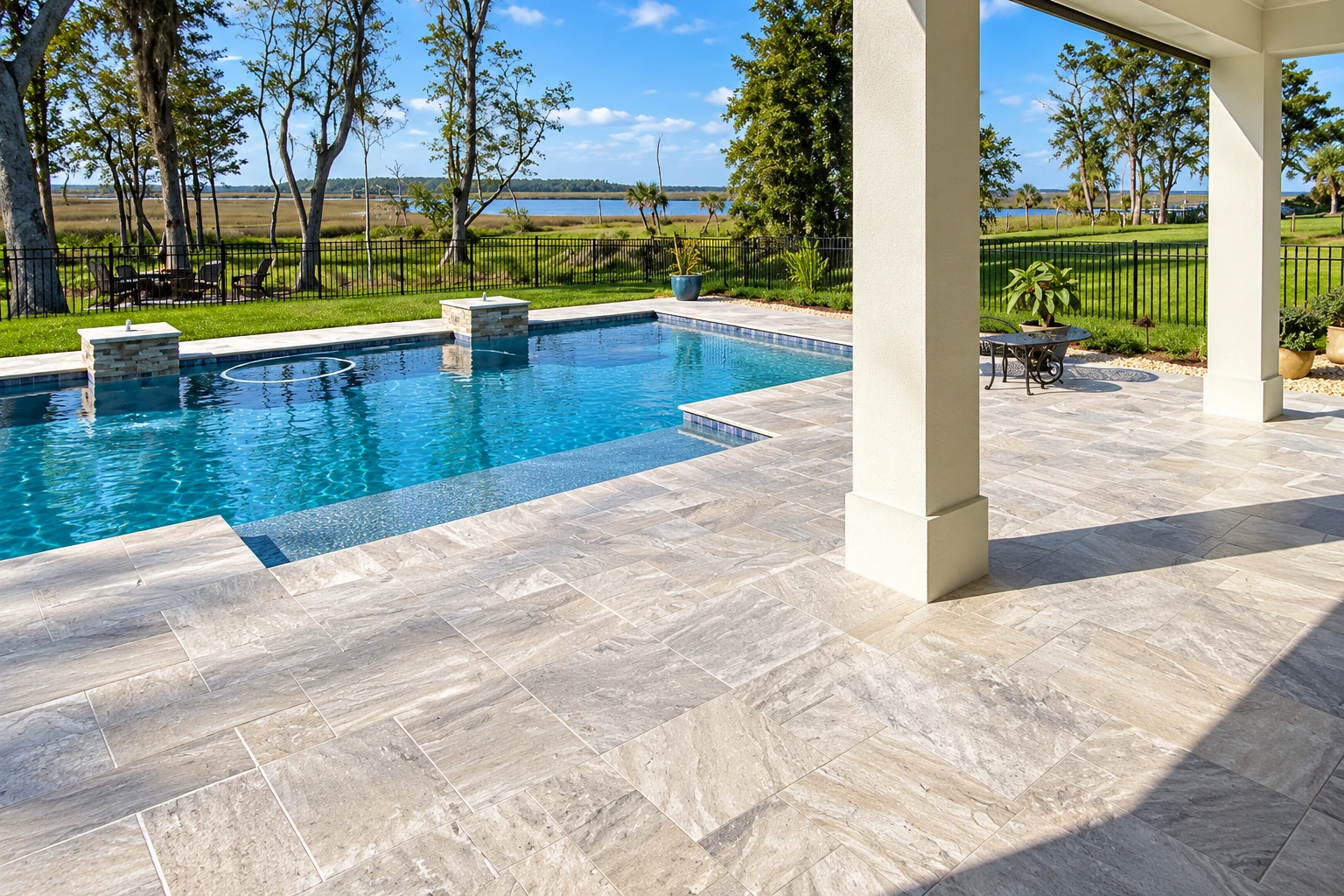
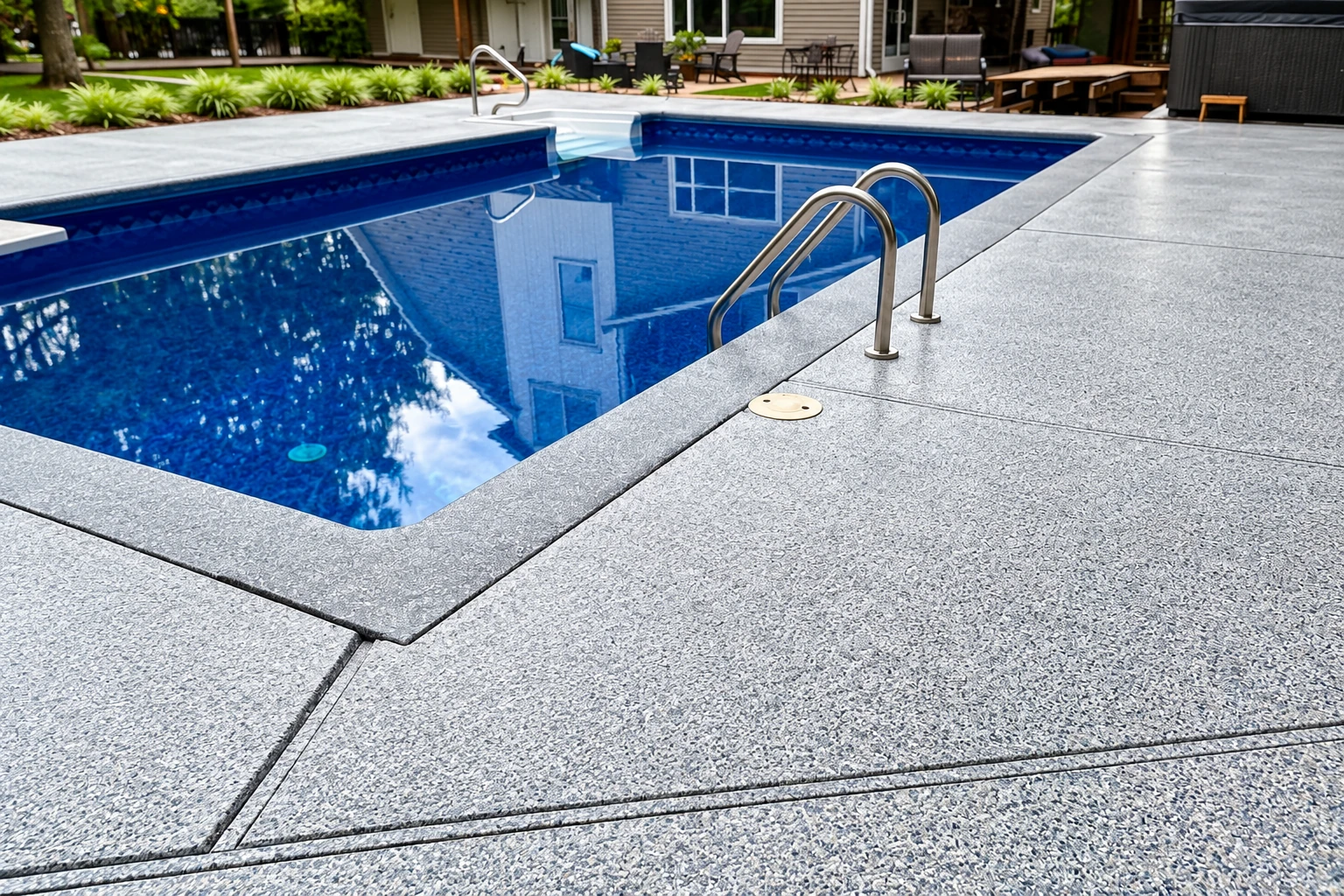
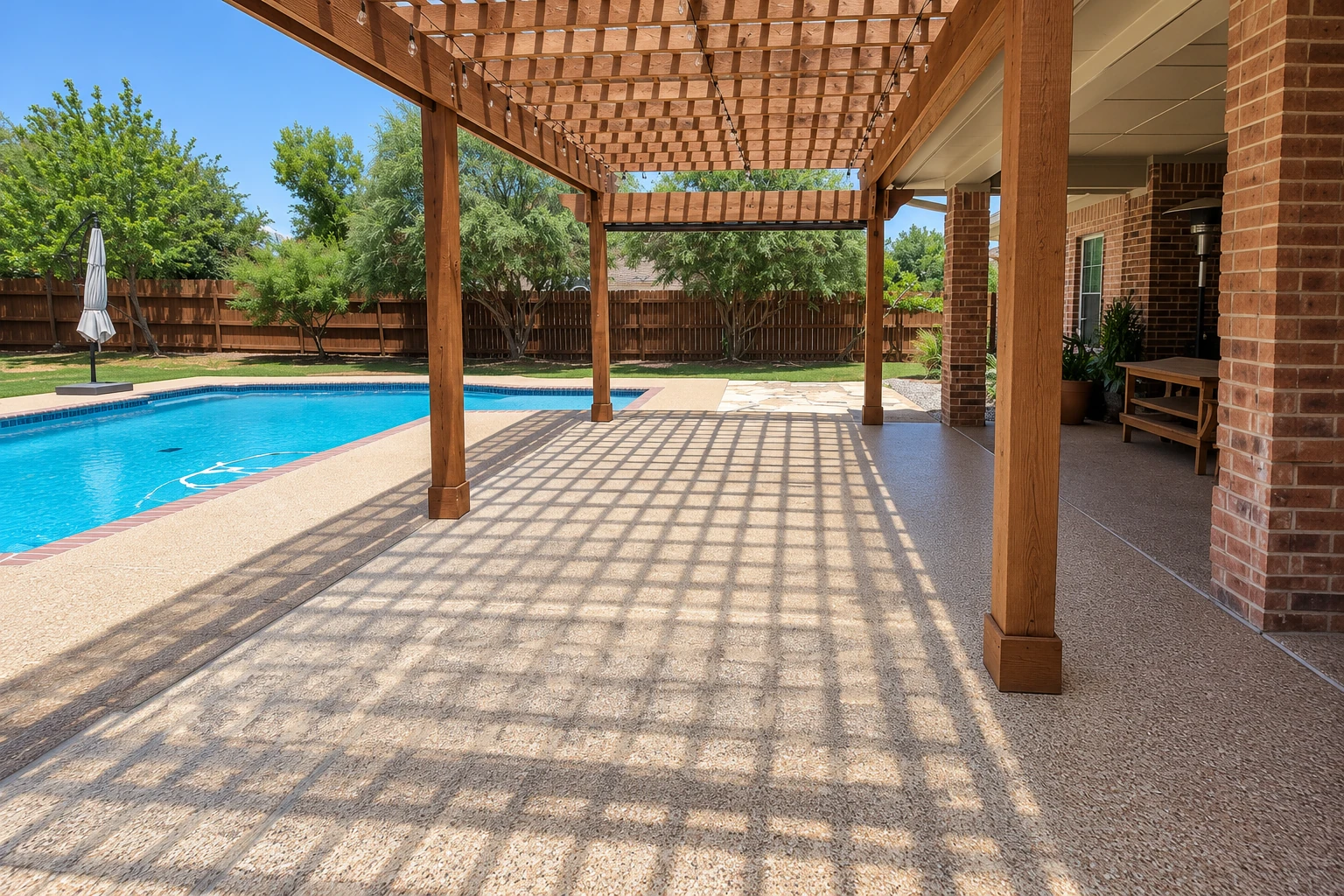
Decks around in-ground pools, finished with a texture that's less slick when wet and sloped so splash water drains off to the yard, not back into the pool.
Front and back steps that replace crumbling or tipping ones, formed with even rises so nobody catches a toe, and tied in to the porch or walk they meet.
Slab foundations for garages, sheds and additions, with the ground dug out, packed and checked for level before the pour, since the building inherits every flaw underneath.
Foundations for new garages and additions, laid out from the plans and poured on footings, so the walls and framing above start out square and level.
Parking areas for small businesses, poured heavier where delivery trucks turn, with the drainage planned out so water doesn't sit in front of your door after a storm.
Footings for decks, porches, additions and walls, dug to the depth the plans call for so the weight above spreads onto firm ground instead of loose fill.
Lifting and leveling slabs and foundations that settled when the ground under them gave way, after we've looked into why they sank in the first place.
Clean saw cuts in existing concrete for doorways, pipe trenches, patches or pulling out one bad section, with less damage to the slab around the cut.
Send the form and we'll reply within one business day to set a visit. Then I'll walk and measure the job and write down what's included and what isn't, free and with no obligation.
We pull the permits our work needs and check the rules with the township or county office before we start, so you know who's involved before anyone breaks ground.
We're licensed and fully insured, so if something goes wrong on your property while we're working, you aren't the one left to cover it.
Our work is backed by our satisfaction guarantee, and I'd rather tell you something you don't want to hear at the estimate than have you find it out a year later.
Here's what homeowners in Lambertville usually ask us about permits, licenses, townships and cracking before they book a driveway, patio or walk.
Plan on it for new work. Michigan law has owners or their agents apply in writing for a building permit before construction, except where the code says otherwise, and Bedford Township's permit application says no construction starts without one. State guidance says ordinary repairs need none. For driveways, the township's checklist also lists a county Road Commission driveway permit and a soil erosion permit.
Usually, yes. With certain exceptions, Michigan requires anyone building a home to be licensed as a Residential Builder with the state's Department of Licensing and Regulatory Affairs, and the same law covers repairing, altering or improving a home for pay. The state also investigates consumer complaints against licensees, so a licensed contractor has someone to answer to.
Most likely Bedford Township, because the 48144 ZIP Code serves the southwest part of it, but it also reaches small portions of Whiteford Township to the west. It's worth knowing before anything gets filed, and it's one of the first things I look up when we check the rules for your job.
It can still crack, because all concrete shrinks as it dries, but we work to make the cracks land where we chose. We cut control joints, grooves that give the slab a planned place to crack, while the concrete is fresh, and we add rebar, steel that holds the pieces together, where the job calls for it.
These are the cities with their own page on our site, but we work in others around Toledo too, so call or send the form to ask about your address.
Call (419) 392-9683 any day of the week or send a project request, so there's time to sort out permits well before your pour.