
Concrete driveway building
We break out the old driveway, dig down to firm ground and pack the base, then pour it thick enough for your cars and cut joints where cracks should land.
Monolith Toledo Concrete is a concrete contractor based in Toledo, OH, pouring driveways, patios, sidewalks, steps and garage floors for homeowners in Rossford, plus parking areas and slabs for small businesses there.
Rossford sits on the Maumee across from Toledo, where we're based, with Northwood next door and Perrysburg up the river, so it's an easy drive for our crew. Most calls here are for driveways, walks, patios and garage floors, at older homes with narrow drives and newer houses toward the edges of the city, plus some lots and slabs for small businesses. The price moves with the size and thickness of the slab, whether old concrete has to come out first, how much digging the base needs and the finish you choose. The schedule turns mostly on the zoning permit and on curing, the days the concrete needs to harden before you walk on it, and longer before you drive on it. When I come out, I measure and write down what's included and what isn't, so you're working from your own number.
Near the river, water is what I watch. Down at the marina the Maumee runs higher and lower with lake levels, floods and surges up the river, and the drive and parking lot there flood when the storm sewer can't keep up. Your yard isn't the marina, but low ground and slow drains show up on jobs here too, so I check where the water runs before the forms go in and we set the slab to fall away from the house.
We dig out soft dirt and pack the subgrade, the ground the slab sits on, because concrete laid on raked fill settles with it. If something gets cut from a budget, it shouldn't be this.
Concrete cracks as it shrinks, so we cut control joints, straight grooves that give the crack a place to go, on time and where they belong. That keeps cracks from wandering across the middle.
We pull the permits our work needs and check the rules with the city before we start, so you know who's involved before the first truck shows up.
We break out the old driveway, dig down to firm ground and pack the base, then pour it thick enough for your cars and cut joints where cracks should land.
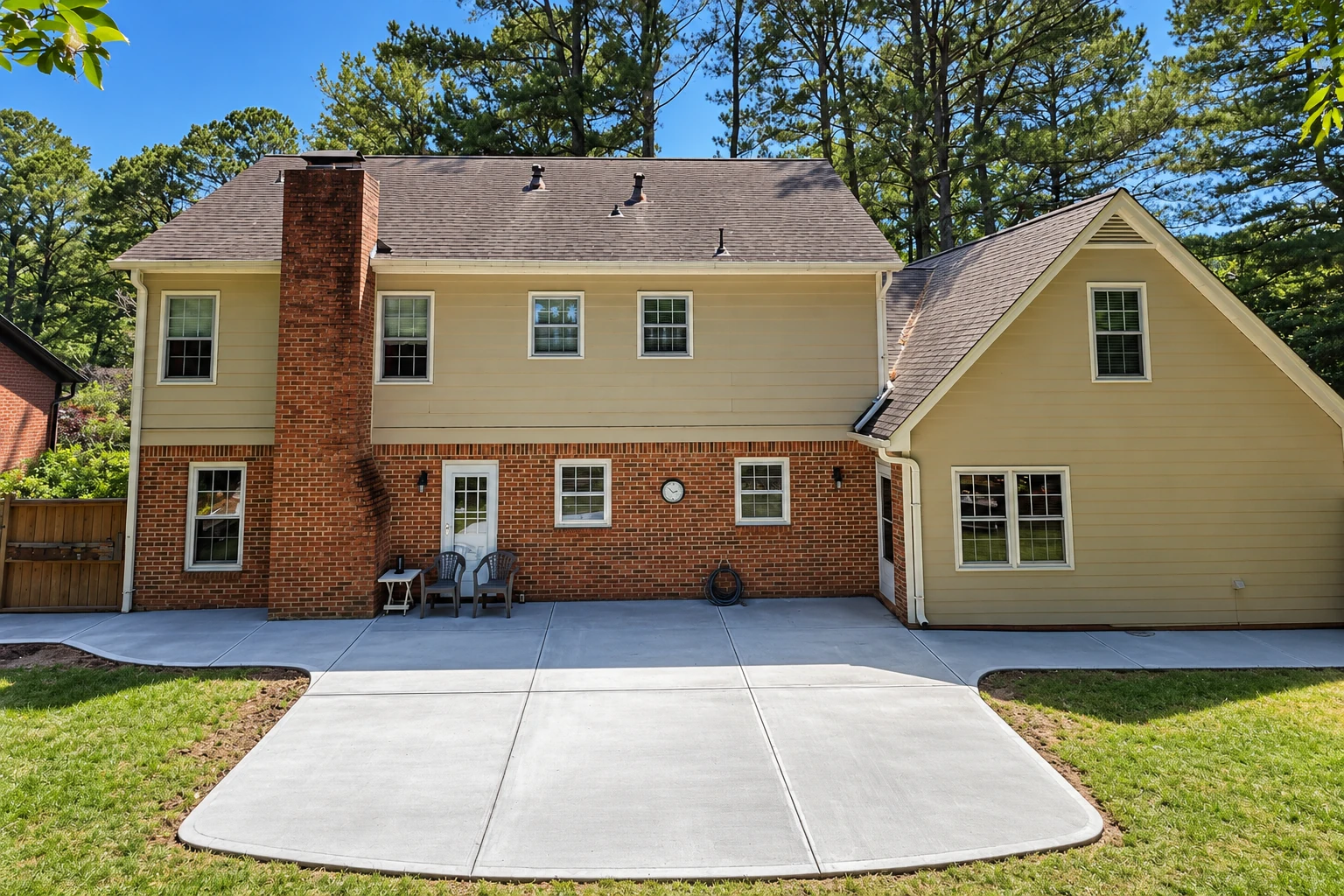
A patio has to shed water away from the back door, so we set the slope before we pour and give it a broom finish, a brushed texture for grip.
Stamped concrete is pressed with patterns that look like stone or brick while it's still soft, so timing matters, and we seal it afterward to protect the surface.
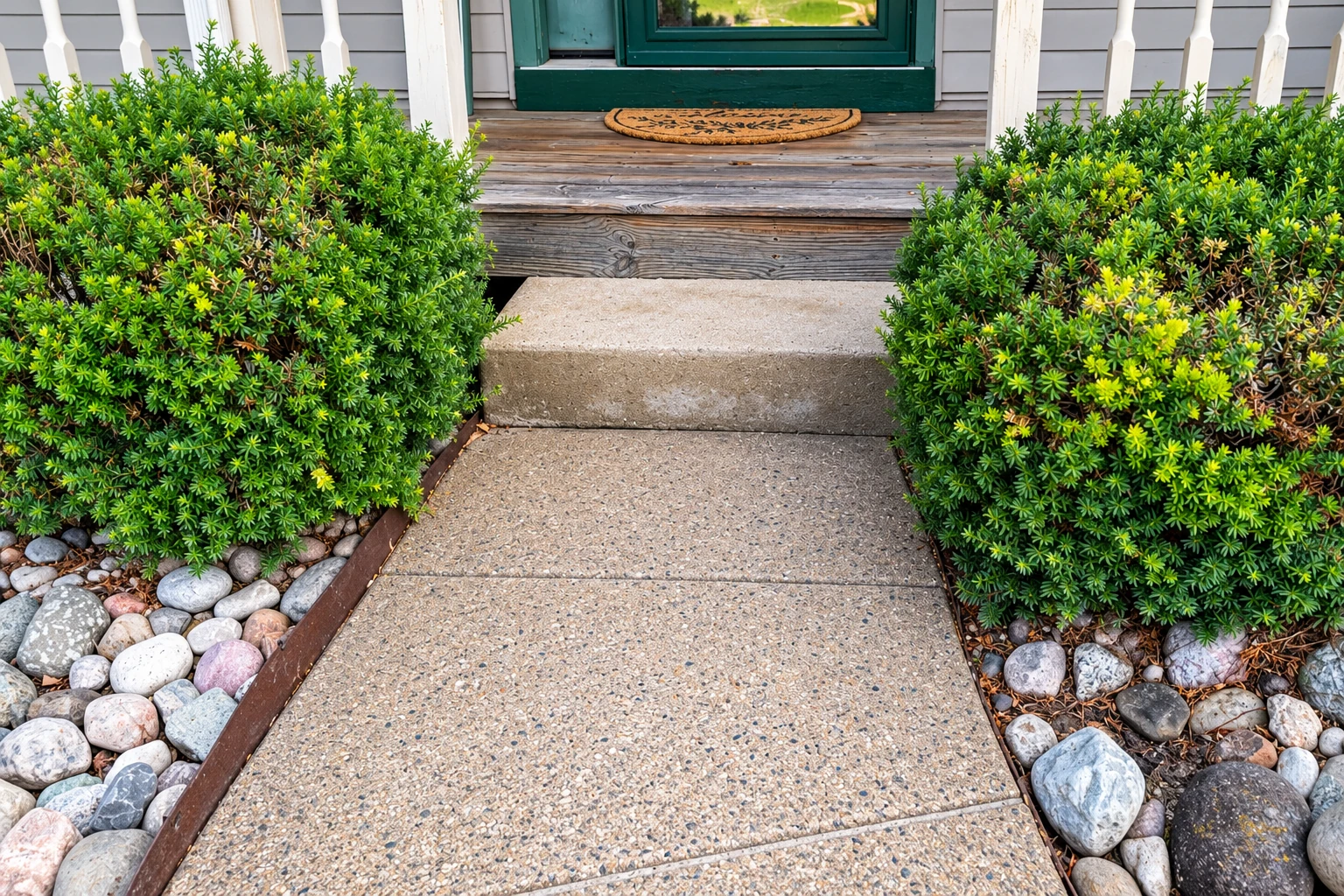
Walks heaved by tree roots or sunk at the joints are tripping hazards, so we tear out the bad sections and pour new ones that line up with what's left.
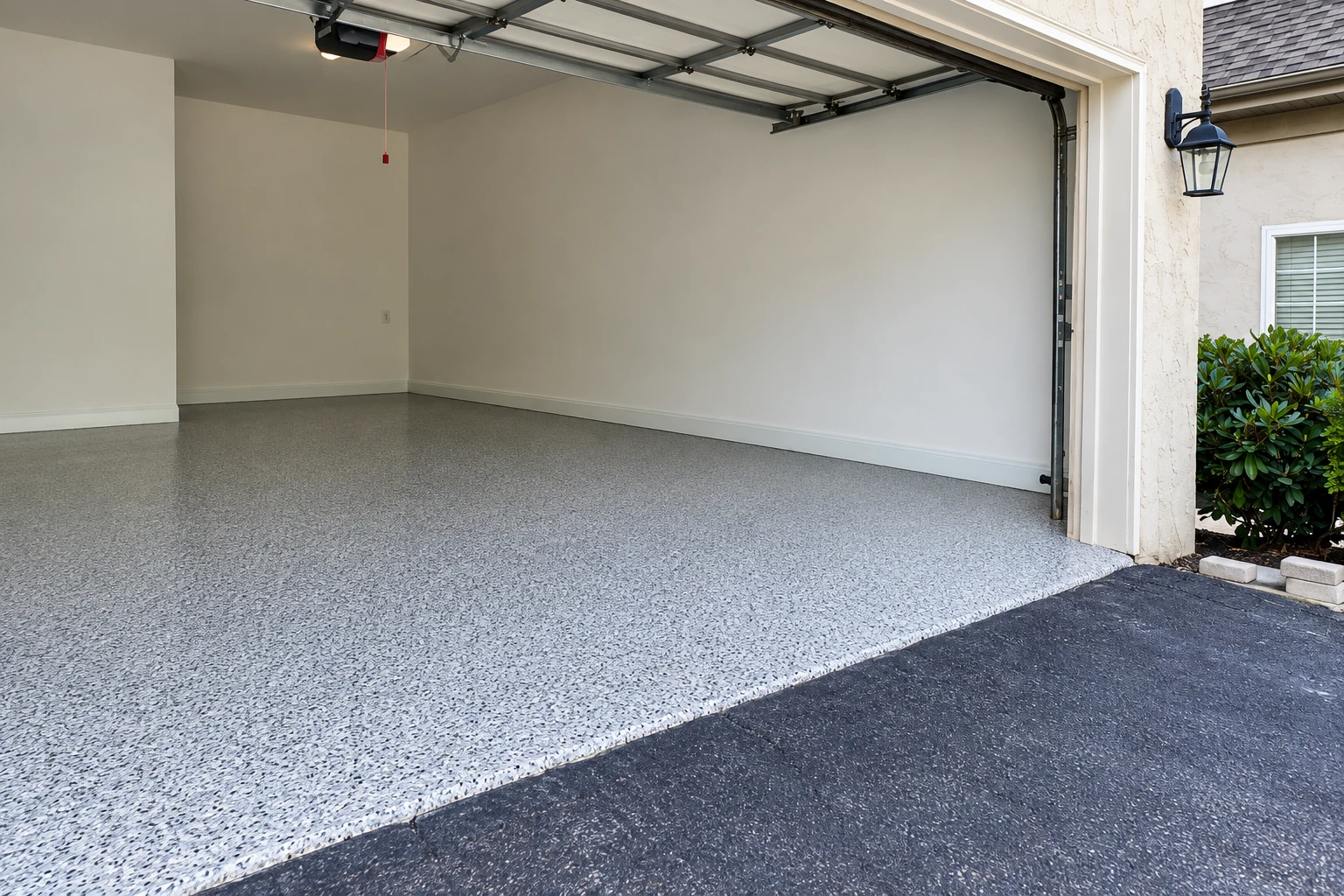
Old garage floors crack and settle over the years, so we break them out, rebuild the base and pour a new slab sloped toward the door to let water run out.
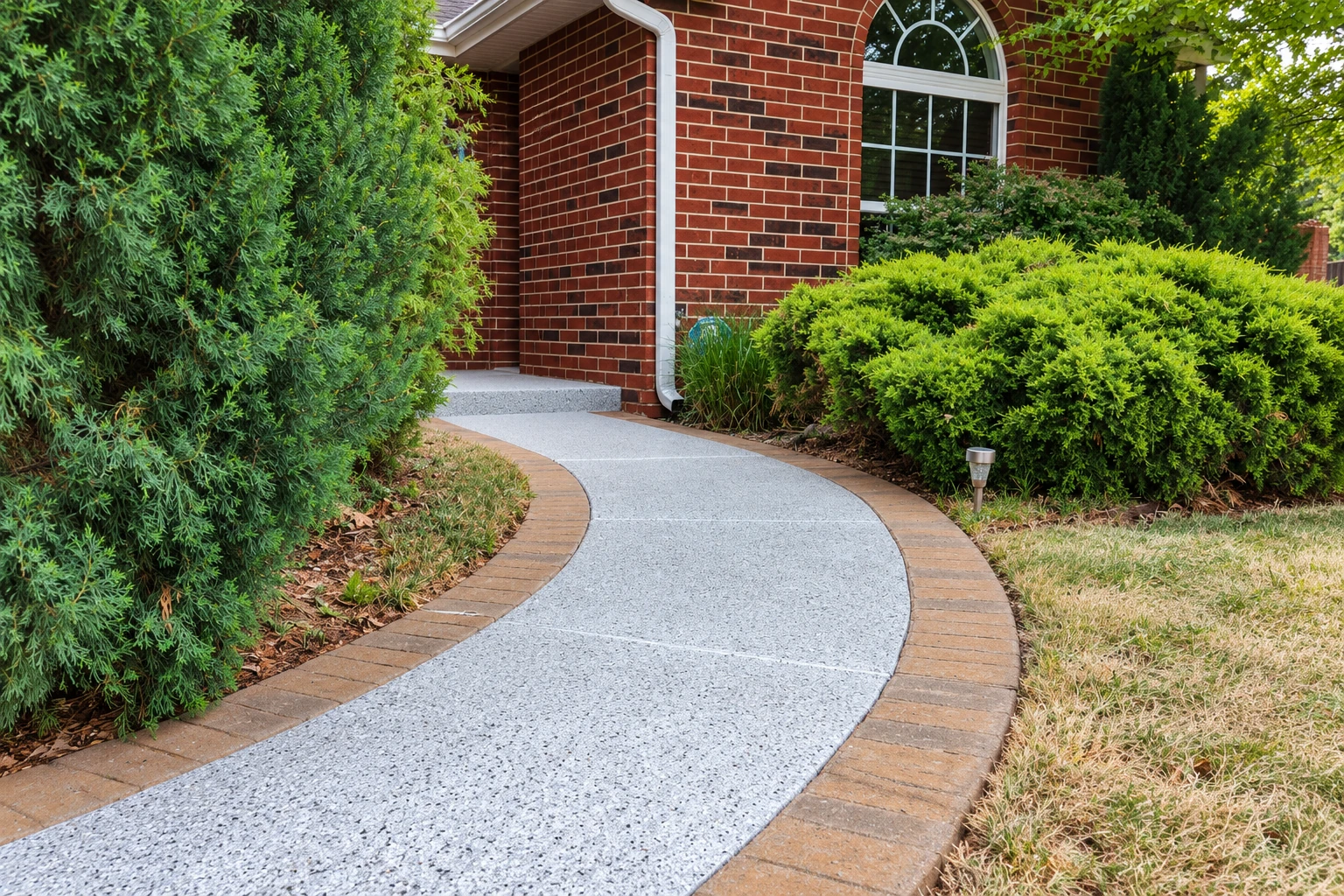
Color, scored lines or an exposed stone finish give a walk or patio character, and I'll bring samples to the estimate so you can pick with the house in view.
A retaining wall holds back soil on a grade change, and it usually fails from water pushing behind it, so we build drainage behind the wall along with the steel.
For basements, shops and additions we pour interior floors flat and level, with the base packed and a vapor barrier underneath to keep ground moisture from coming up through.
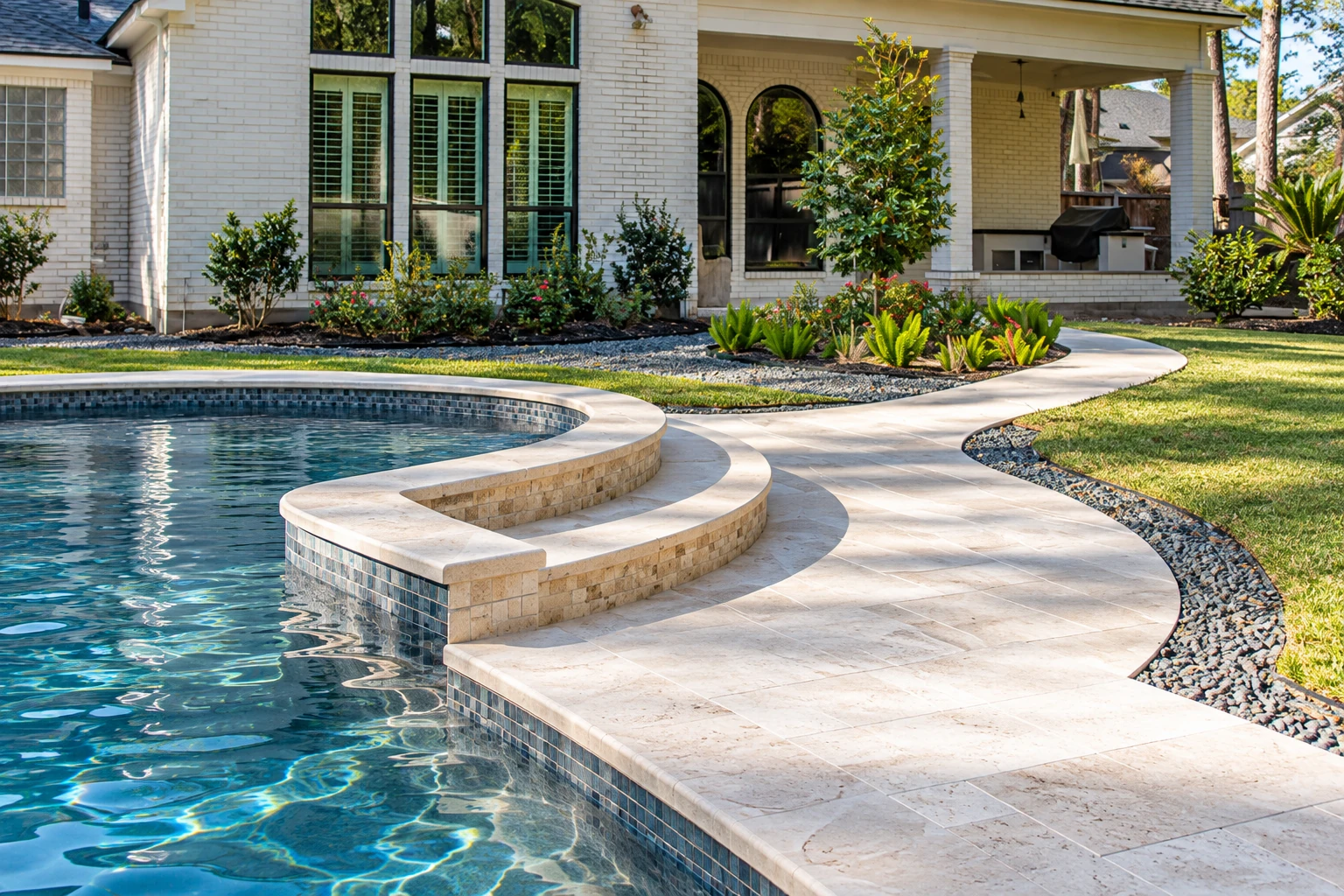
Pool decks see bare feet and splashing, so we give them a textured finish that grips wet feet and slope them away from the pool so water runs off.
Front steps crumble at the edges, so we form new ones with even rises and rebar inside, steel bars that hold them together, then broom the treads for grip.
A slab foundation carries a garage, addition or shed, so we dig footings where the plans call for them, compact the ground and set the steel before any concrete arrives.
We form and pour foundation walls for garages and additions, checking the layout against your plans first, because a wall off by an inch throws off everything built on it.
For small business lots we plan the pour around your hours where we can, and grade the lot so water heads to the drains instead of standing at your door.
Footings are the wide concrete base under a wall, post or porch, and we dig them to the depth the plans call for so the load sits on firm ground.
When a slab or foundation has sunk unevenly, we look at why first, since lifting it without fixing the water or soil problem underneath usually means it sinks again.
We saw-cut concrete for new doorways, drain lines and clean edges where old and new slabs meet, with water on the blade to keep the dust down.
Send the form or call, and we'll reply within one business day to set a time. I come out, walk the job and measure it, and the estimate is free with no obligation.
I walk the job, measure it and write down what's included and what isn't, so you can compare it line for line with anyone else's number.
Our crew does the work with me on site, so if something turns up once the old concrete is out, you hear it from me before we go on.
We're licensed and fully insured, and the work is backed by our satisfaction guarantee. I'd rather tell you something hard at the estimate than have you find it out a year later.
Here are the permit, contractor and water questions that come up when you're planning a driveway, walk or patio in Rossford.
Yes. Rossford's Zoning Inspector issues a zoning permit for sidewalks, paving, curb cuts, fences and swimming pools, so a new driveway, walk or pool deck needs one. It's the city's land-use approval, and it can be revoked if work hasn't begun within a year. We line it up with the city before we pour.
Yes. Concrete and paving contractors have to register with the city's Zoning Department before working in Rossford, along with residential general contractors and the electrical, plumbing, HVAC, sewer and solar trades. Under those rules, the general contractor on a job oversees the applications, permits and inspections and holds any preconstruction meeting the department requires.
No. State guidance says residential contractors in Ohio aren't required to hold a state license. The state licenses commercial electrical, HVAC, plumbing, hydronics and refrigeration contractors, and concrete isn't on that list. Many Ohio building departments still ask for a state license before a contractor can pull permits, and in Rossford, concrete contractors also register with the city.
Start with FEMA's online flood maps, the Map Service Center or NFHL Viewer, which FEMA names as the best place to begin. Where an effective flood map covers your area, its data is what counts for the federal flood insurance program's minimum rules. I'd rather you know that before we plan a slab on low ground near the river.
These are the cities with their own page on our site. If your address isn't listed, call or send the form and ask, since we work across the cities around Toledo too.
We answer (419) 392-9683 seven days a week, into the evening, so you can call after work or send the form tonight.