
Concrete driveway building
We break out the old, sinking driveway, dig out and pack the base, and set the new slab to drain toward the street instead of back at the garage.
Monolith Toledo Concrete pours driveways, patios, walks, steps, garage floors and foundations for homes in South Monroe, MI. I come up from Toledo to look at each job, and our crew does the work with me there.
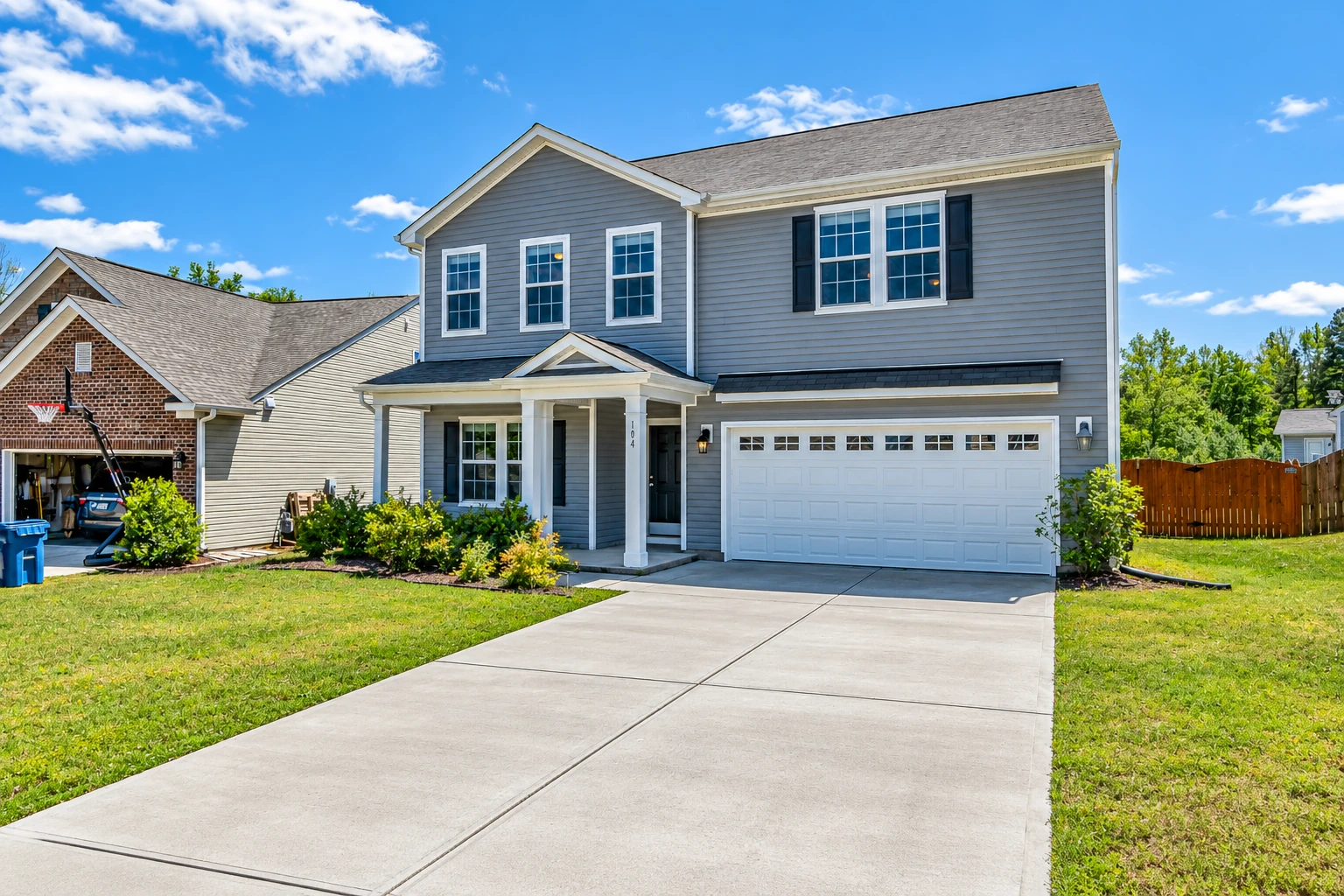
South Monroe sits in Monroe Charter Township in eastern Monroe County, about 11 miles north of Toledo, where we're based. Most of our calls here are flatwork, the driveways, patios, walks and garage floors that lie on the ground, for houses along and off Dixie Highway and in subdivisions like Ravenwood. We do the same work down in Temperance and Lambertville.
Your price moves with the size of the slab, how much old concrete we haul off, how much base we dig out and pack, and the finish you pick. The schedule turns on the weather and on curing, the days new concrete needs to harden before you walk or drive on it. I walk the job, measure it and write down what's included and what isn't, so you see your own number. Most yards here are flat, so water won't leave a slab on its own, and that's why we set the slab to fall away from the house before we pour.
I'd rather tell you at the estimate that the old base has to come out than have you find out a year later, because concrete is hard to undo once it's poured.
We pour in the cooler part of the day when the weather lets us, because concrete that sets fast in midday heat ends up with a weak, dusty top that chips.
The packed base gets buried on the first day, so it's the first thing people want to trim from the budget. We won't, because a slab settles right along with the dirt under it.
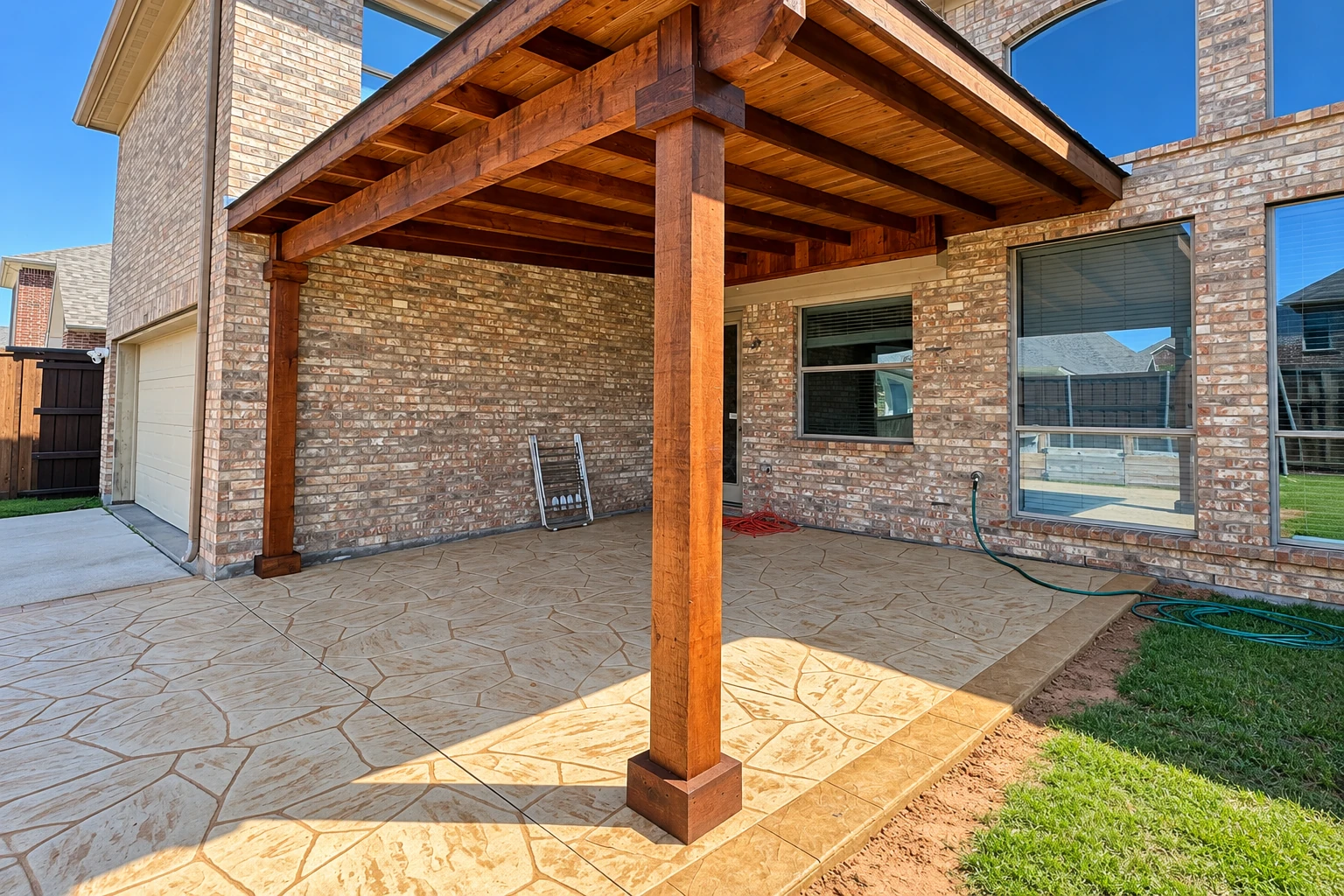
We break out the old, sinking driveway, dig out and pack the base, and set the new slab to drain toward the street instead of back at the garage.
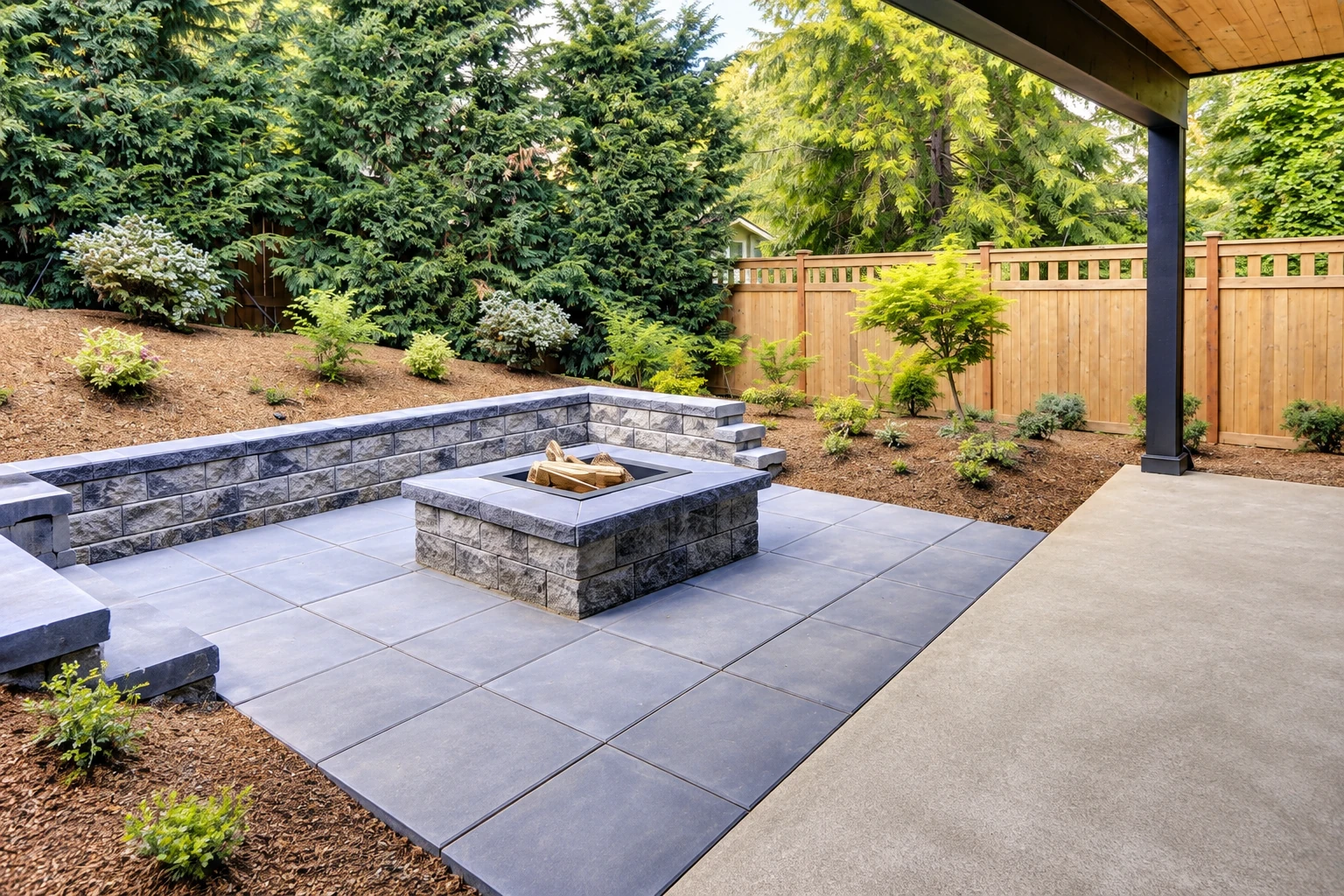
A patio off the back door has to pitch away from the house, so we check where the water runs on your yard before we set the forms.
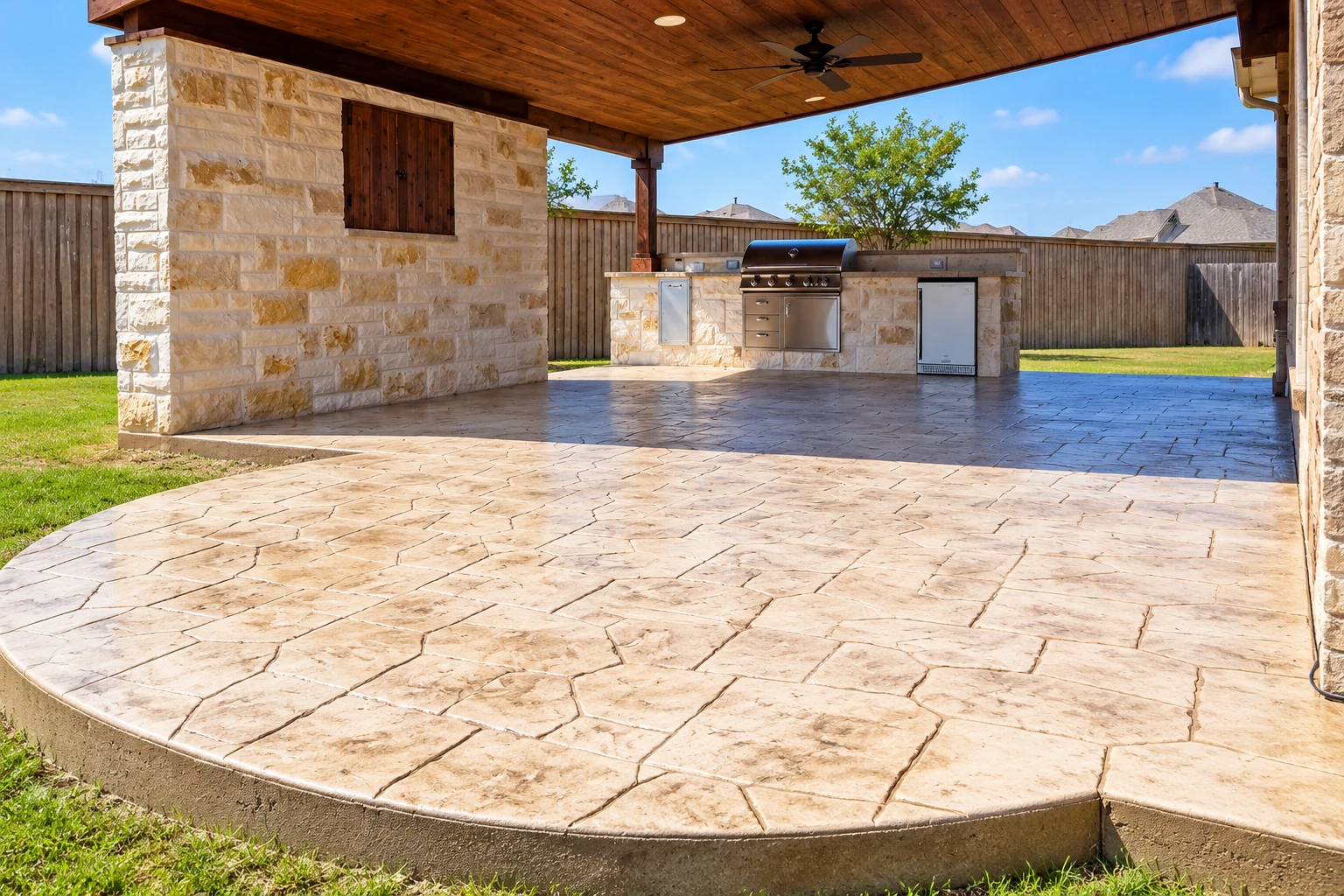
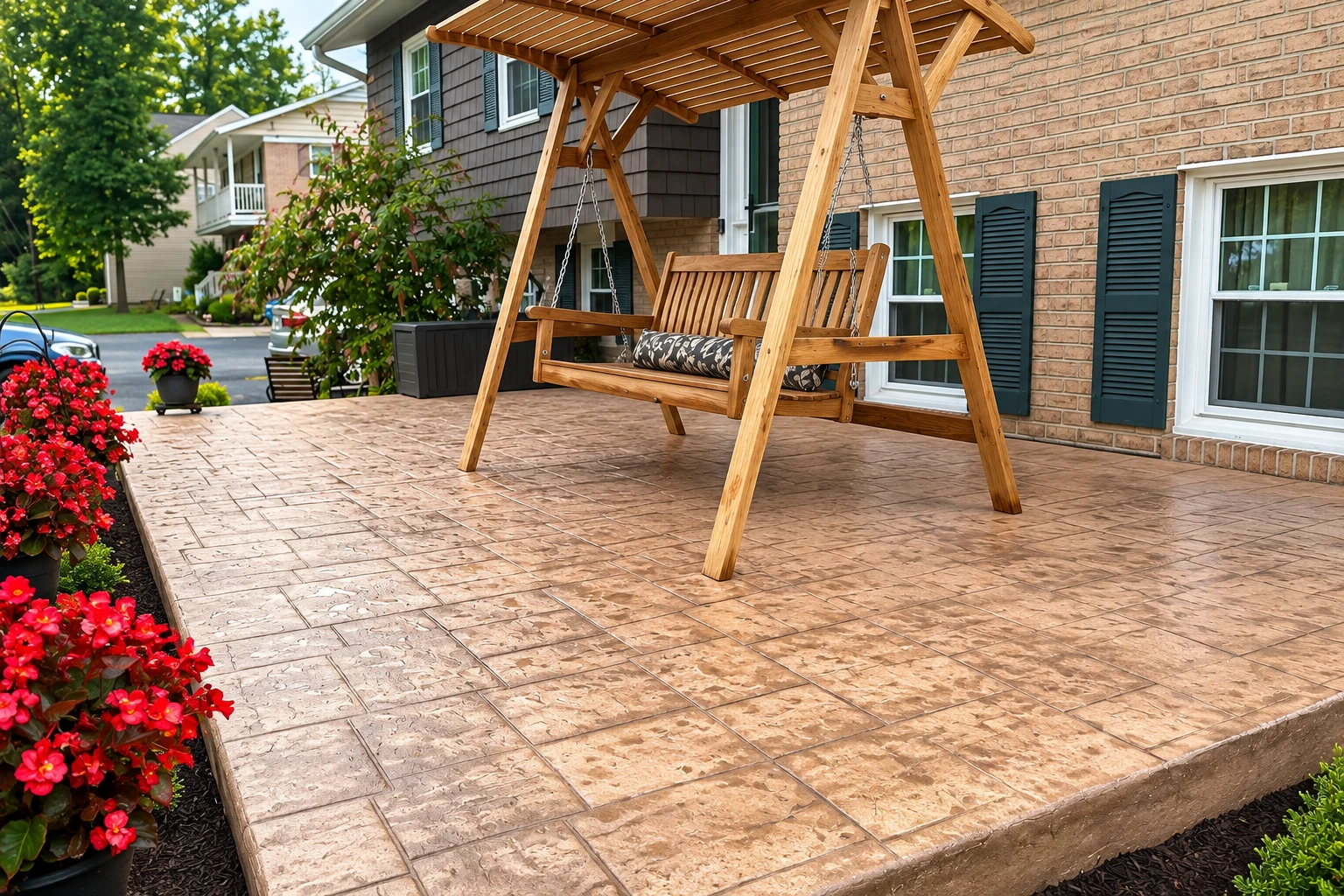
Stamped concrete gets a pattern pressed into the wet surface, so it needs decent weather and a full crew on pour day, because the window to stamp closes fast.
We replace heaved or chipped walks and cut control joints, shallow grooves that tell the concrete where to crack, so any crack runs in a straight line.
Garage floors here take salt dripping off cars all winter, so we pour on a packed base and finish the surface smooth enough to sweep out easily.
Colored, stained and exposed-aggregate finishes for a front walk or patio, which we talk through at the estimate since each one changes the cost and the upkeep.
Poured walls hold back soil where a yard steps down, with rebar, the steel inside that holds the concrete together under the push of the ground, and drainage behind it.
Basement, shop and outbuilding floors poured level on a packed base, with the joints laid out before the pour so cracks follow lines we picked.
Pool decks get a broom finish, a light brushed texture that gives wet bare feet some grip, and a slope that carries splash water away from the pool.
We replace crumbling or sinking front steps with formed concrete steps set on footings, sized so each step is even and easy to climb with groceries.
Slabs for additions, garages and sheds start with the subgrade, the ground the slab sits on, dug down to firm soil and packed before any concrete goes in.
Footings and poured walls for additions and new structures, formed and reinforced to the plans, with the rules checked with the township office before we dig.
For small business owners we pour lots and aprons built for delivery trucks, with the drainage worked out so water doesn't sit where customers park.
Footings for decks, porches and additions, dug below where the ground heaves in winter so the structure above doesn't shift as the frost comes and goes.
When a slab or foundation has sunk, we look at what's under it first, because raising it without fixing the cause usually means it sinks again.
We saw-cut openings, take out damaged sections and cut joints into existing slabs, using water to keep the dust down near your house and your neighbors'.
Send the form and we'll reply within one business day to set a time. I'll come out, look the job over and write you an estimate, free and with no obligation.
I come out to look at every job and write the estimate myself, then our crew does the work with me on site, so the person who planned it is there for the pour.
We're licensed and fully insured, and our work is backed by our satisfaction guarantee. If you'd like to see our insurance in hand, ask for it at the estimate.
We take calls at (419) 392-9683 until 10 PM on weekdays and 9 PM on weekends, so you can reach us after work instead of on a lunch break.
Here's what South Monroe homeowners ask us most about permits, licenses, plans and whether a new slab will hold up.
Check with the township first, since it posts its building permit applications on its website. We pull the permits our work needs and check the rules with the township office before we start, so you'll know who's involved and the paperwork doesn't hold up the pour.
The state's Department of Licensing and Regulatory Affairs licenses residential builders in Michigan. Anyone who builds a home, or is paid to repair, alter, add to or improve one, has to hold that license, with certain exceptions. On a permit application for residential work, the licensed contractor lists their license number and its expiration date.
Usually not for a house, because the state's guidance exempts one- and two-family homes under 3,500 square feet of calculated floor area from the rule that construction documents be sealed and signed by an architect or professional engineer. A larger house needs that seal. When your job comes with drawings, we form and pour to them.
It can, because concrete cracks some as it shrinks and as the ground freezes and thaws, but the aim is cracks that stay tight and run where we planned them. We dig out and pack the base so the slab doesn't settle, slope it to drain, and cut the control joints on time instead of late.
These are the cities with their own page here, and we work in others around Toledo too, so call or send the form with your address to ask.
Call (419) 392-9683 or send the form, since a cracked slab usually gets worse each winter as water gets in and freezes.