Patios that look like stone
Color and a stamped pattern can make a patio read like stone or brick, without separate pavers that shift over time and let weeds up through the gaps.
Got a plain gray slab or a worn, stained one? We'll tell you if it can take a decorative finish or needs a new pour.
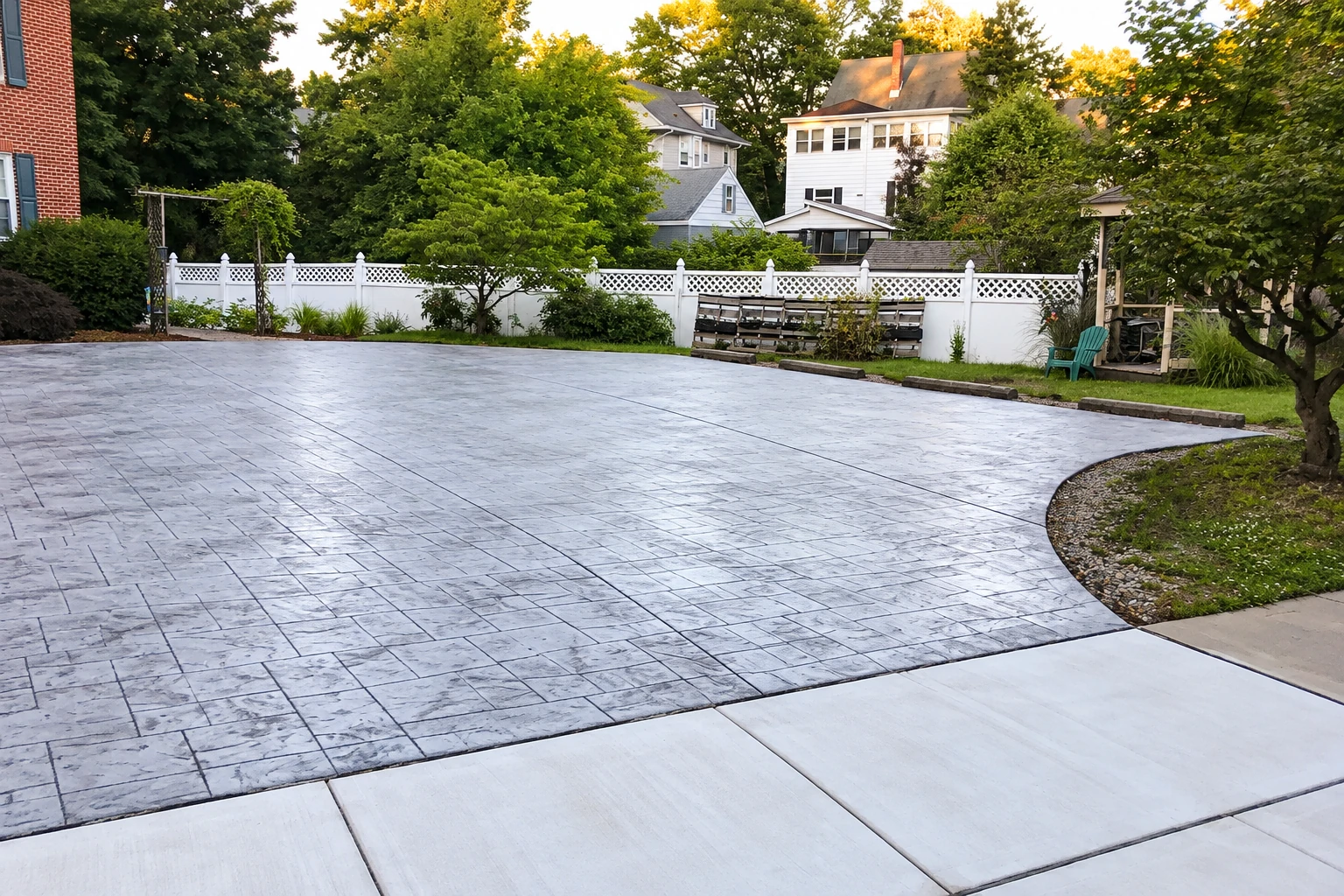
Decorative concrete in Toledo is flatwork, the slabs you walk, sit and park on, finished with color, a stamped pattern, a stain or a textured overlay so it looks like more than plain gray. We can pour you a new decorative slab or, when your old one is solid, put a new surface on it.
Most calls start one of two ways, with an old patio or walk that's worn, stained or chipping, or with a new slab you want to look like more than a sidewalk. The price moves with the size, whether old concrete has to come out first, how much digging and base work the spot needs and how involved the finish gets, since a stamped, colored pattern takes more hands than a broom finish, the light dragged texture that keeps a slab from getting slick. The schedule turns mostly on the weather and on curing, the wait while new concrete gains strength, so we like to book decorative work well ahead of the cold. When I walk the job I measure it and write down what's included and what isn't, so you have your own number to go on. We're based in Toledo and do this work across the cities around it in northwest Ohio and southern Michigan.
I come out to every job and write the estimate myself, then I'm on site with our crew for the work, so what we talked about is what gets poured.
I measure the job and write down what's included and what isn't, so you can line our estimate up against anyone else's without guessing what got left out.
We're licensed and fully insured, and our work is backed by our satisfaction guarantee, which counts on decorative work because the finish is the part you'll look at every day.
If you want an old slab resurfaced, I check first whether it's sound enough to take an overlay, a thin new top layer bonded to the old concrete, and if it's heaving or cracked through, I'll tell you it needs replacing rather than covering it up. On a new pour we dig out to firm ground and pack the subgrade, what the slab sits on, because a base that's only raked level settles with the dirt and takes your pattern down with it. We check where the water runs so the slab falls away from your house, pour in the cooler part of the day when we can since midday heat can leave a weak, dusty top, and press in the color and pattern while the concrete is still workable. Then we cut control joints, shallow grooves that give the slab a straight line to crack along, on time, because concrete still cracks and a late cut lets it pick its own spots. We let it cure before anyone uses it. If the budget gets tight, I'd cut back the pattern before I'd cut the base work, because nobody sees the base on day one but everybody sees it fail.
Decorative work often ties into other jobs. On a sloped yard, concrete retaining walls hold the grade so a patio has level, stable ground, and their face can be finished to go with it. Indoors, stains and decorative finishes go on basement, sunroom and shop slabs through our concrete floor installation work, so the look can carry from outside in.
Color and a stamped pattern can make a patio read like stone or brick, without separate pavers that shift over time and let weeds up through the gaps.
A colored border or stamped band dresses up the walk guests see first, and keeping a broom finish down the middle gives you better footing when it's wet or icy.
Most driveways stay plain where the tires run, but a stamped or colored border along the edges gives the front of the house a finished look without patterning the whole slab.
Stains and decorative finishes go on basement, sunroom and shop floors, giving you a hard, easy-to-sweep surface with some color instead of bare gray concrete.
Send us the slab's size, its condition and whether it reaches the curb. We reply within one business day to set a time, then I come out, measure and write the estimate, free and with no obligation.
A rough size, like a backyard patio or the length of the front walk, helps me plan the visit and bring finish samples you can hold up against the house.
Cracks, sinking, flaking or a slab that's just plain tired tell me early whether I'm likely looking at a resurface or a new pour, so the visit isn't wasted.
Work between the curb and your property line falls under extra city rules, so knowing up front lets us plan for that before we put a price together.
Sample photos of stamped patterns, colors, stains and borders on patios, walks and walls, to help you point at what you like.
Answers on cost, overlays, winter, sealing and the city's rules, the things people ask me before they book a decorative job.
A stamped concrete patio in Toledo usually costs about $8 to $17 per square foot, which is the going rate around here, not a quote from us. Where yours lands depends on the pattern and color, the base work, and whether it's reinforced with rebar, steel bars set inside to hold cracks tight, which costs more. Your estimate puts your number in writing.
No, an overlay renews only the surface, and it only works on a slab that's structurally sound and that it can bond to. Put one over a slab that's heaving, settling or cracked clean through and the damage is still there underneath, which makes it the costliest mistake in this kind of work. A slab like that needs to come out and be poured new.
It can, if the mix has enough entrained air, tiny air pockets built in so freezing water has room to go, and concrete like that can take severe exposure. The riskiest times are when soaked concrete freezes or deicers melt snow below freezing. Ask about the mix before the pour, and keep deicers off new concrete until it has cured, even if it looks hard.
Ohio's concrete industry recommends sealing new concrete after it's 30 days old and before its first freeze, following the sealer maker's instructions. So a fall pour needs to go in 30 days ahead of the first freeze to fit the sealer in. Sealer can cut down on water and salt getting in, but it won't fix a weak surface or stand in for a good mix and proper curing.
Most projects in Toledo need a permit, though some minor repairs, routine maintenance and small work may not, and the city's Division of Building Inspection processes them. We pull the permits our work needs and check the rules with the city before we start. If your house is in one of Toledo's historic districts, the work may also need a Certificate of Appropriateness before it begins.
Walks and driveway approaches between the curb and your property line follow the city's current construction standards, and Toledo's code counts a contractor for that stretch as one licensed by the city. The contractor or the owner calls the city's Division of Engineering Services 24 hours ahead to book an inspection. If your job reaches the curb, mention it when you reach out so we plan for it first.
Call (419) 392-9683 any day into the evening, or use the form or email hello@toledoconcretecontractor.com, and we'll set a time to look at your slab.