
Concrete driveway building
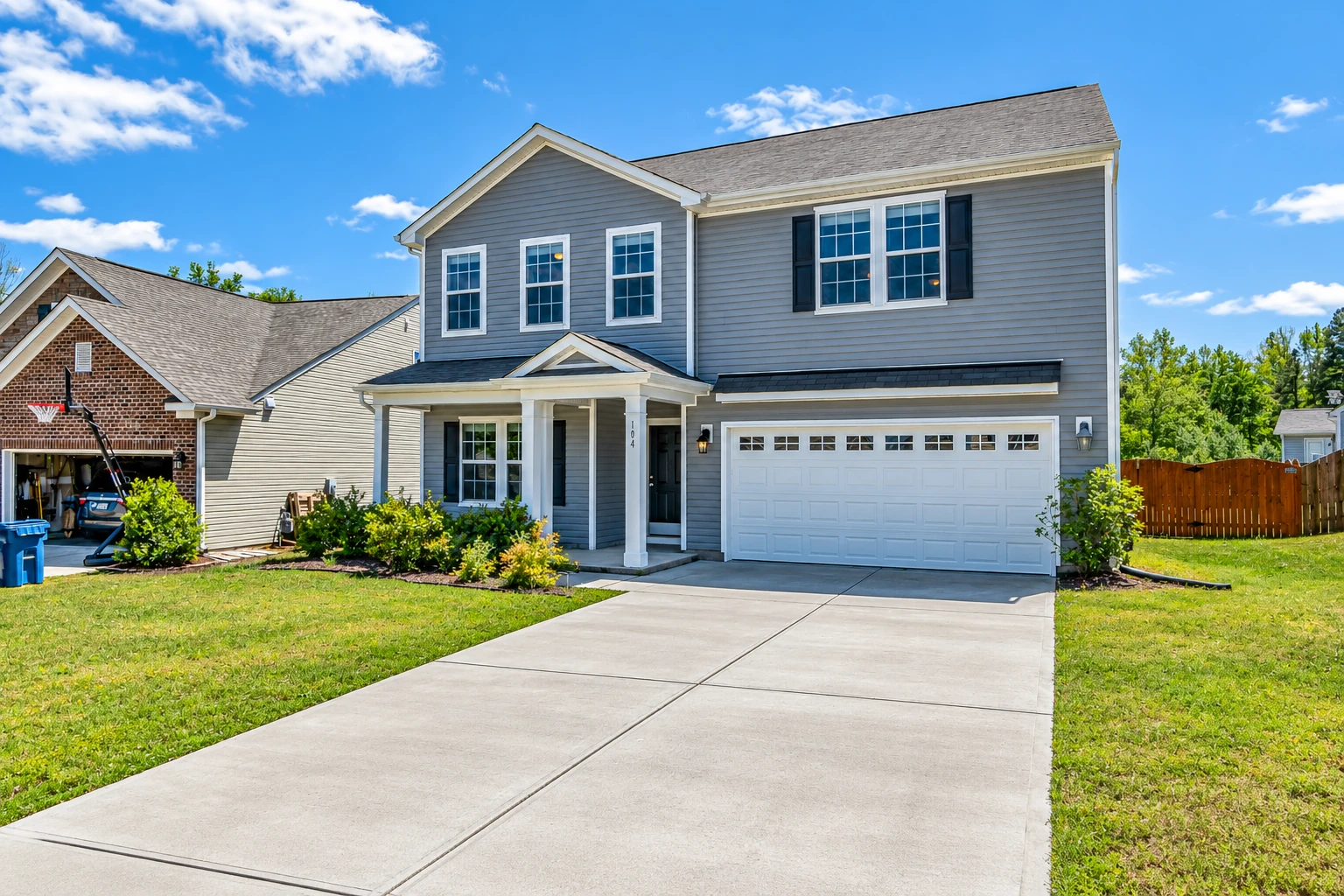
We tear out the old driveway, dig the base down to firm ground and pack it, then pour with a slope that sends water toward the street, not the garage.
Monolith Toledo Concrete is a concrete contractor based in Toledo, OH. We build and replace driveways, patios, sidewalks, steps, garage floors and foundations for homeowners and small business owners across the city.
Most of our calls come from homeowners in Toledo and the cities around it, plus some small business owners. The work runs from a cracked front walk or a sunken driveway to a new patio, a garage floor or footings for an addition. The price moves mostly with the size of the job, how much old concrete has to come out, how much base work the ground needs and the finish you pick. The schedule turns on the weather, on any permit the job needs and on curing, the wait while fresh concrete gains strength before you walk or drive on it. Your own job's details get pinned down at the estimate, where I walk it, measure it and write down what's included and what isn't. We do the same work across the river in Oregon and Rossford.
Frost is what shapes the work here. An older city design table lists Toledo's frost line at 36 inches minimum, which is how deep winter can freeze the ground, so steps, walls and footings set too shallow get pushed around. On flatwork like driveways, patios and walks, we dig out soft soil and pack the subgrade, the ground the slab sits on, because a slab laid on raked dirt settles when that dirt does.
We pull the permits our concrete work needs and check the rules with the city before we start, so you know which office is involved before the old slab comes out.
We look at where water runs on your lot before we set forms, so the new slab falls away from the house instead of sending rain back toward your foundation.
If a budget has to give, I'd cut the fancy finish before the base, because a dug-out, packed base keeps a slab from settling, and you can't fix it later.
We tear out the old driveway, dig the base down to firm ground and pack it, then pour with a slope that sends water toward the street, not the garage.
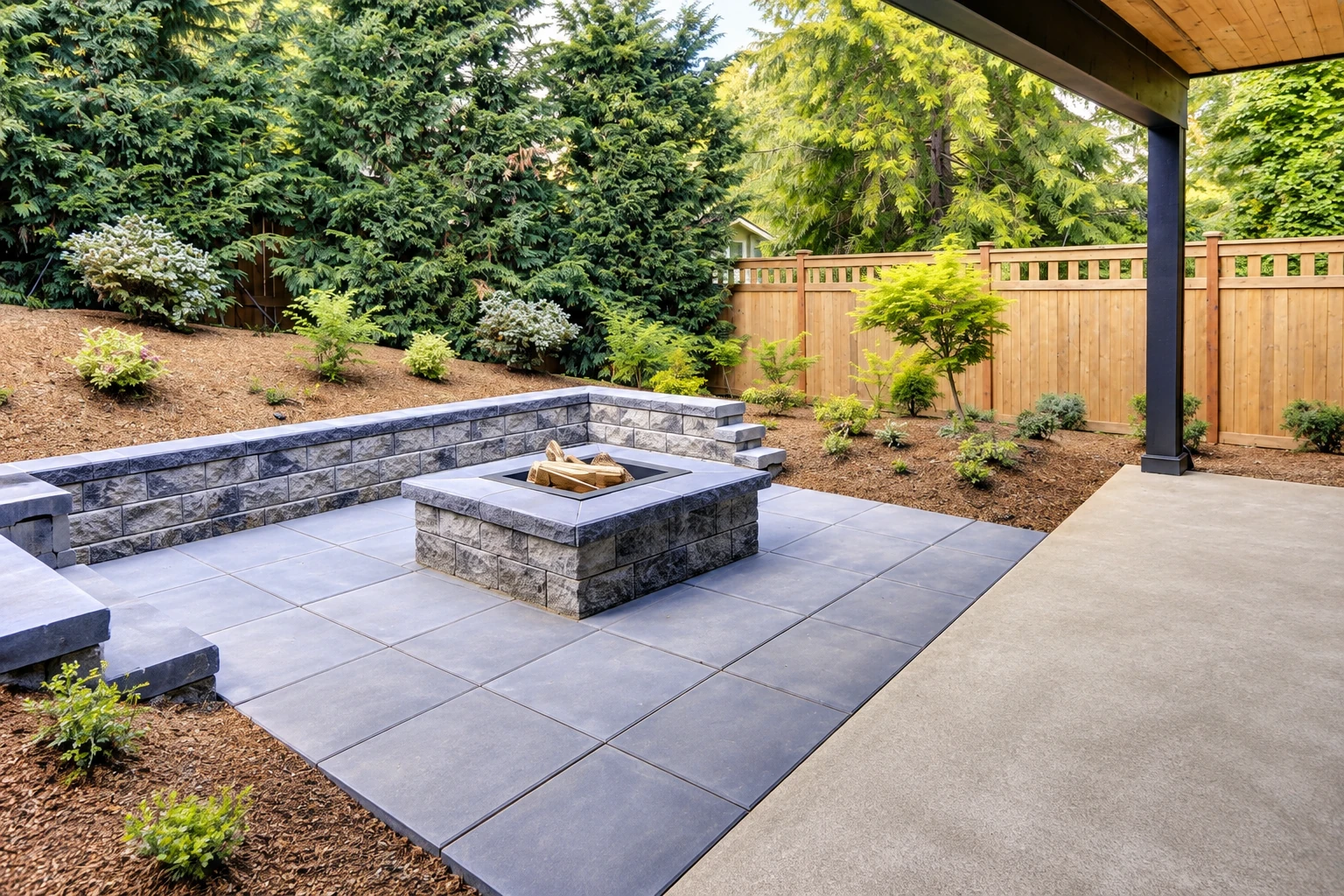
Backyard patios set at the right height and pitched away from your house, so rain and snowmelt run off into the yard instead of pooling at the back door.
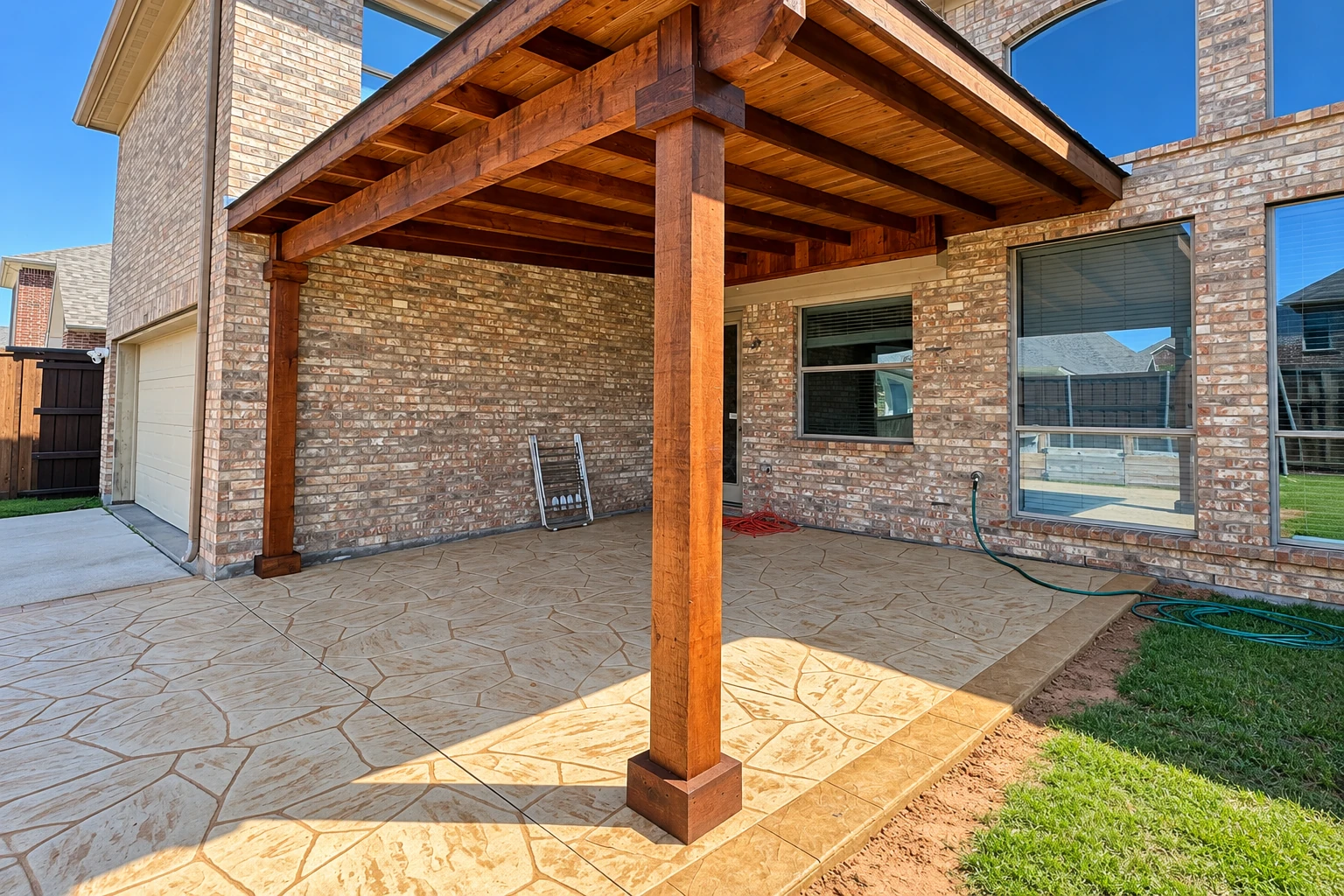
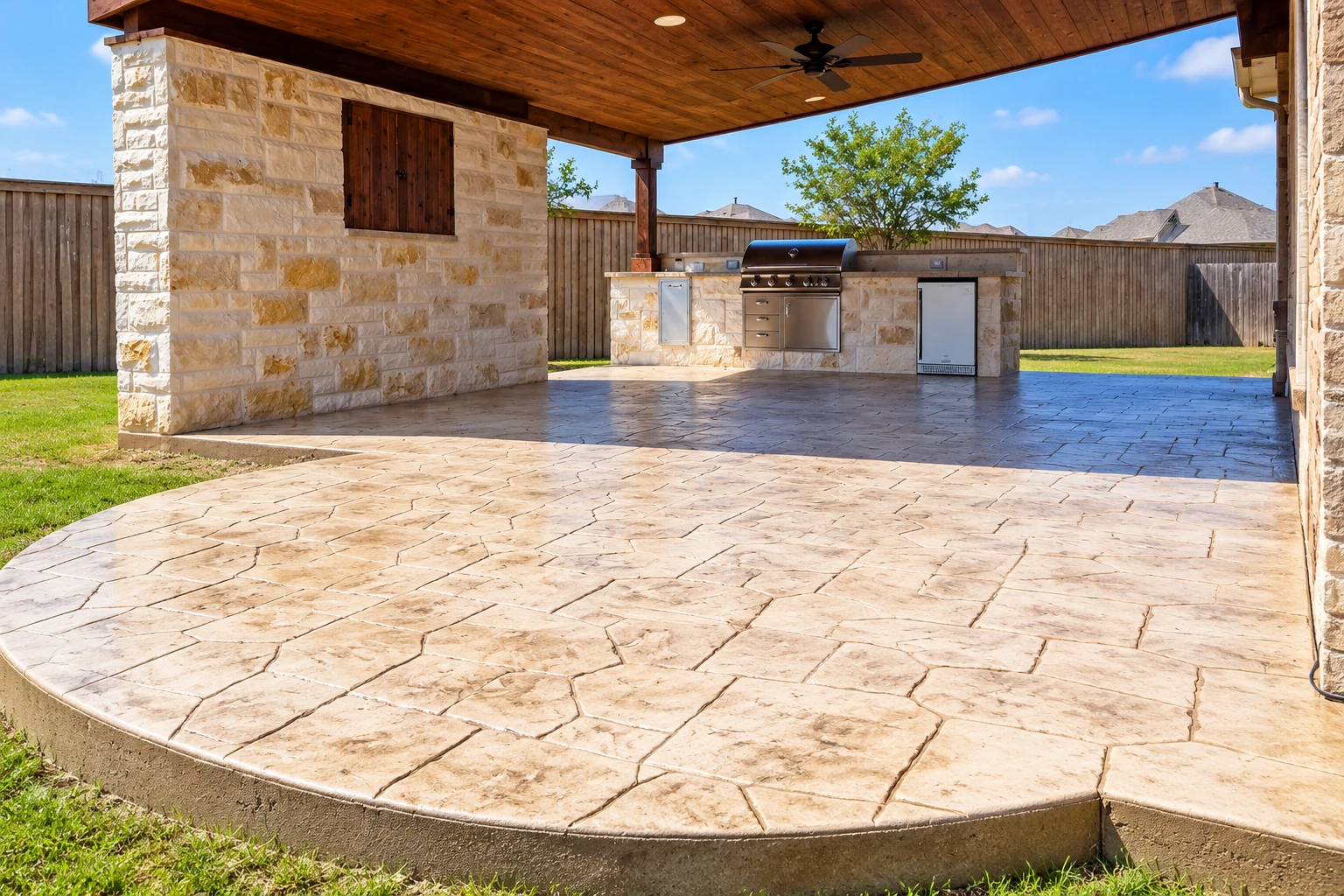
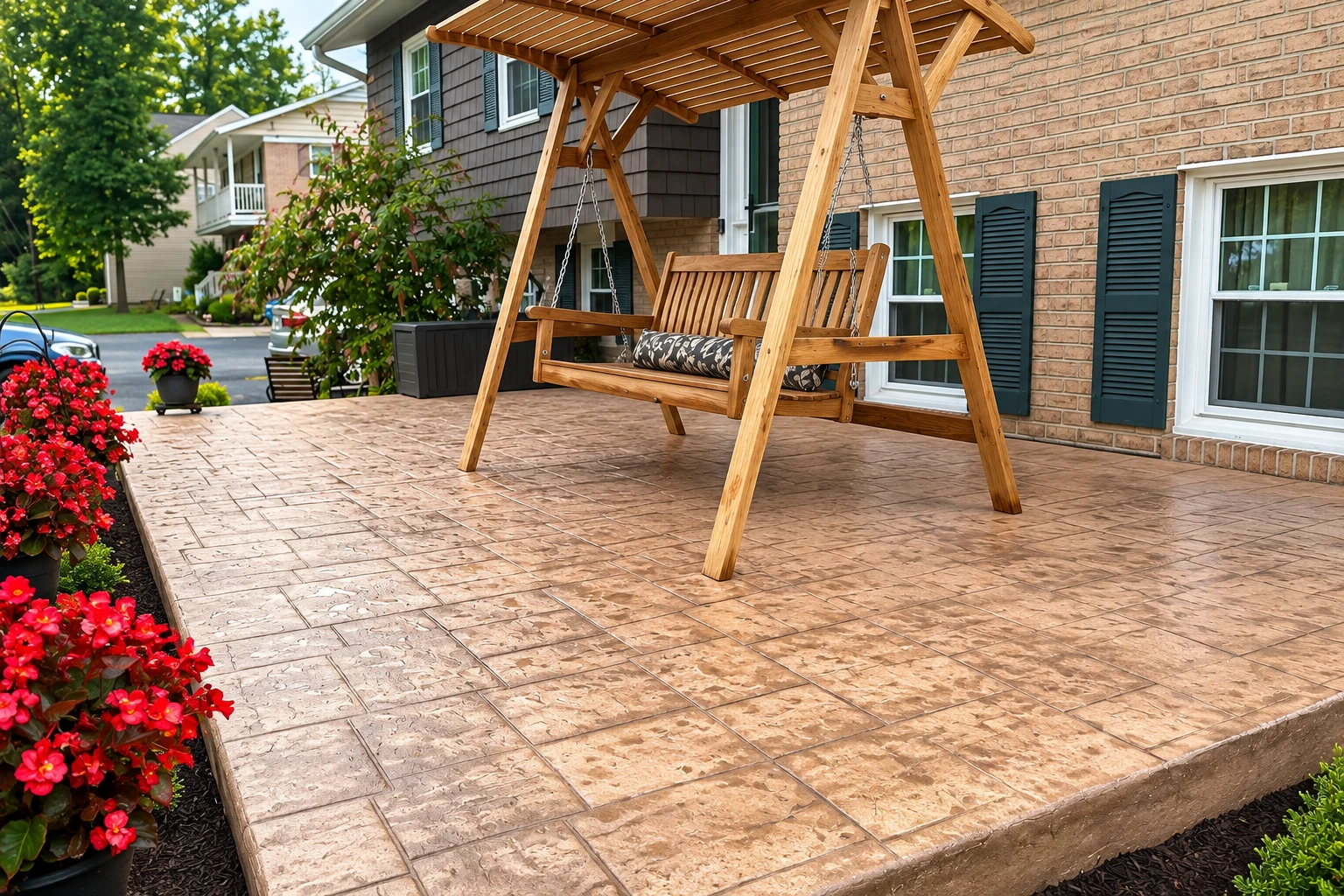
Patterns pressed into fresh concrete to look like stone or brick, poured over the same packed base as plain work, because a pattern won't hide a slab that settles.
Front walks and side paths replaced where old slabs have heaved into trip edges, with control joints, cut grooves that give cracks a straight line to follow.
New garage slabs and replacements for cracked or sunken floors, poured with a gentle pitch toward the door so melting snow off the car drains out.
Colored, stained and exposed-aggregate finishes for walks, entries and patios when plain gray isn't what you want, laid over the same base as everything else we pour.
Poured walls that hold back a slope or a raised yard, with rebar, the steel that holds the concrete together, and a path for water so pressure doesn't push the wall out.
Interior slabs for basements, shops and additions, poured level and finished smooth or textured depending on what goes on top and how the room gets used.
Decks around in-ground pools with a broom finish, a lightly brushed texture that grips wet feet, and a pitch that carries splash water away from the pool.
Front and back steps rebuilt when the old ones have pulled away from the house or crumbled, set on footings dug deep enough to sit below the winter frost.
Slab foundations for garages, additions and outbuildings, with the subgrade dug, packed and checked before any concrete goes down, since a slab is only as solid as what's under it.
Footings and foundation walls for additions and new builds, formed to the plans and checked before we pour, because nobody gets a second try under a finished house.
Lots and drive aprons for small businesses, poured heavier than a home driveway and laid out so delivery trucks and rainwater both have somewhere to go.
Footings for porches, decks, additions and columns, dug to the depth the job calls for so the weight above rests on firm ground instead of loose fill.
Lifting sunken slabs and settled sections back toward level when the concrete itself is still sound, which can cost less than tearing it out and pouring new.
Clean saw cuts through slabs, walls and driveways for new doorways, plumbing trenches or pulling one bad section without breaking up the concrete around it.
Send the form and we'll reply within one business day to set a time for me to come out. The estimate is free, done on site and comes with no obligation.
I come out myself to look at every job and write the estimate, so you're talking to the person who'll be on site with our crew when we pour.
If I see a problem, like a base that won't hold or water running toward the house, I'll tell you at the estimate instead of letting you find out a year later.
We're licensed and fully insured, and our work is backed by our satisfaction guarantee, so you know where things stand while our crew is working on your property.
Here's what Toledo homeowners usually ask about permits, licenses and cracking before a pour, answered the way I'd answer at the estimate.
Yes. Toledo code requires a Certificate of Zoning Compliance for all residential driveways, separate from any building permit. Work that builds or alters a structure, like footings and foundations, goes through the city's Division of Building Inspection for a building permit. We pull the permits our work needs and check with the city before we start.
Yes. The city requires contractors to register and keep a license to do business there, and city code requires a license before anyone works in the business of home improvements or remodeling. If you own the house and do the work yourself, that license doesn't apply to you. We're licensed and fully insured, and I'm glad to go over it at the estimate.
If your house is a designated landmark or sits in a designated historic district, city code requires a written Certificate of Appropriateness before environmental changes to the property, and that district's Historic District Commission issues it. Before we take on a driveway, walk or steps there, we check with the city whether the work counts, so you know where you stand before we start.
It may still crack, since concrete shrinks as it cures, but the cracks should run along the control joints instead of across the middle. Most of the ugly cracking I see comes from a raked base or joints cut late, so we pack the base and cut the joints on time.
Besides Toledo, these are the cities with their own page on our site. If your address isn't listed, call or send the form and ask, since we work in other cities around here too.
Call (419) 392-9683 or send the form, because an early look leaves time to sort out permits and plan the pour around the weather.