Basement floors that have failed
When an old basement floor has heaved, sunk or broken up, we usually break it out and start over from the ground, because pouring over a failed slab hands its problems to the new one.
Old floor cracked, sunken or just bare dirt? We dig out the soft spots, pack the base and pour a level, finished slab over it.
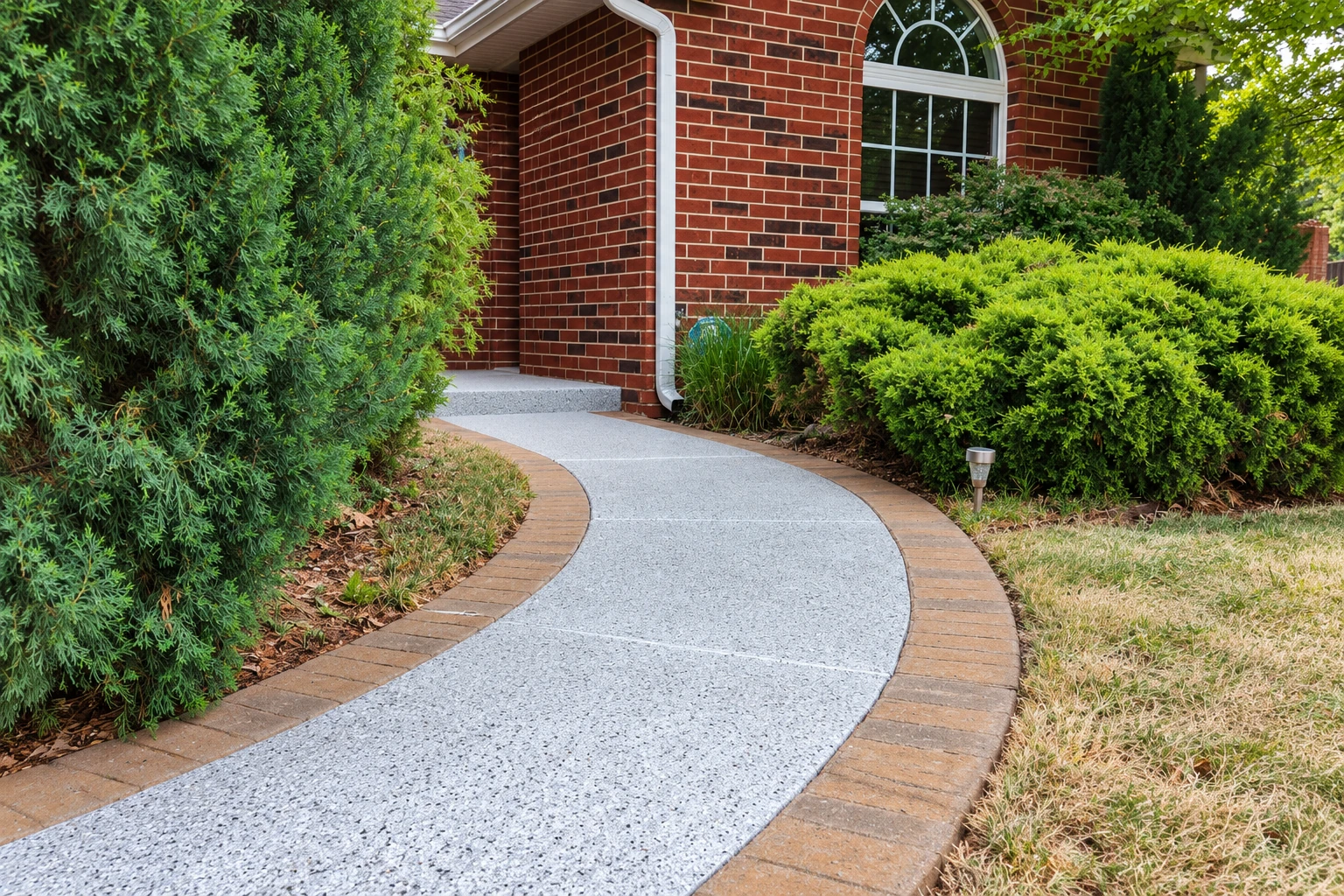
Concrete floor installation in Toledo means pouring a new slab for a basement, shop, shed or addition over a base we've cleared of topsoil and soft spots and packed hard, so the floor sits on firm ground instead of settling with the dirt under it.
Most people call because an old floor has cracked, sunk or started pooling water, or because they've got a dirt floor they want gone. What moves the price is the size of the floor, how much soft ground has to come out, whether you want steel in the slab and any finish beyond plain gray. The schedule mostly turns on the base work, the weather and the wait while the concrete cures before you can use it. I'll give you your own figure after I've measured the space at the estimate.
I come out, measure and write every estimate myself, and our crew does the work with me on site, so the person who priced your floor is there for the pour.
Toledo requires every contractor on a job, subcontractors included, to be licensed or registered with the city, so it's worth asking anyone you call. We're licensed and fully insured.
Concrete cracks, and I'd rather tell you that at the estimate than have you find out a year later. We plan the job to keep cracks small, and our work is backed by our satisfaction guarantee.
First we dig out the topsoil and any soft spots, because a slab is only as steady as its subgrade, the soil and gravel it sits on, and then we bring in gravel and pack it until it's firm. We set the forms and check how the ground and the slab slope, so water runs where you want it and not toward a wall. Any rebar or wire mesh you've chosen goes in next, steel laid inside the slab to hold it together. We like to pour early in the day, since midday heat can leave a weak, dusty top, and we cut control joints, shallow grooves that give the concrete a straight place to crack, while it's still fresh. Then the floor cures, and we keep it from drying out too fast so it hardens all the way through. If the budget gets tight, I'll tell you to save on the finish before the base, because nobody sees the base on day one, but it decides how the floor holds up for years.
The same base work carries over outside the house. If the new floor sits above or below the doorway or yard next to it, we can build concrete steps to meet it, and when you're ready for the backyard, concrete pool decks start with the same dug-out, packed ground.
When an old basement floor has heaved, sunk or broken up, we usually break it out and start over from the ground, because pouring over a failed slab hands its problems to the new one.
A dirt or gravel floor in a shed, barn or workshop turns muddy and uneven, while a slab gives you a flat surface you can sweep, roll a mower across or set a workbench on.
A new room or enclosed porch needs a floor that sits at the right height and doesn't settle away from the house, so we get the ground packed and graded before any concrete arrives.
Some of our calls come from small business owners who need a storage room or work area floored, so we plan the slab around what will sit on it and when you need the space.
Send the form and we'll reply within one business day to set a time for me to come out, measure the space and write down what's included and what isn't, free and with no obligation.
A rough length and width is plenty, because square footage is the first thing that moves the price and tells me how much base and concrete the job needs.
If there's an old floor in the way, mention it, since breaking it out and hauling it off is its own piece of work and belongs on the estimate from the start.
A basement rec room and a shop floor with a truck parked on it aren't built the same, so knowing the use helps me plan the base and whether steel belongs in the slab.
Example photos of slab finishes, joint layouts and edge details, so you can point at what you like when we talk through your floor.
Here's what Toledo homeowners usually ask us about a new concrete floor, from the price to when you can use it.
A concrete slab in Toledo usually costs about $6 to $11 per square foot, before any staining or stamping. That's the going rate around here, not our quote, and tearing out an old slab adds its cost on top. Your own figure comes from the estimate, after I measure the space.
Probably somewhere, because completely crack-free concrete isn't possible, but the cracks can be kept small. Packing the ground and clearing soft spots helps control cracking, and wire mesh or other steel placed in the right spot won't stop cracks but does keep them narrower. That steel adds to the price per square foot, and we'll talk through whether your floor needs it.
You should be able to walk on it within 48 hours. Concrete takes 28 to 30 days to fully cure, and curing should start right away, with a sprayed curing compound or damp burlap kept moist for at least three days, which helps the floor come out durable and crack resistant. To be safe, plan on waiting a week before heavier loads go on it.
We do, if your floor needs one. The city holds you responsible for making sure permits are obtained, but a hired contractor has to get them. Most construction in Toledo needs a permit from the Division of Building Inspection, and its no-permit list names paint, tile and carpet, not concrete floors, so we check your job with the division before we start.
Usually, yes. EPA guidance calls for heavy plastic sheeting on top of the gravel to keep soil gases out of the house, and EPA's 1993 radon map puts Lucas County in its moderate zone, with testing recommended for every home. Plastic right under a slab raises the odds of cracking, so finishing has to wait until the water that rises to the top is gone.
Yes, as long as the ground under it isn't frozen. Snow and ice get cleared first and concrete goes only on thawed ground, because a slab poured on frozen soil can sink when it thaws. A cold stretch can push a pour back, and I'll tell you at the estimate what the season means for your floor.
We take calls seven days a week, so call (419) 392-9683 or send the form with a rough size of the floor.