Driveway plans approved first
Toledo's code has property owners get driveway plans approved by the city before a building permit is issued, so we settle the layout early and it doesn't hold up your pour date.
Driveway cracked, sinking or holding puddles? We dig out, pack a solid base and pour a new slab that sheds water away from your house.
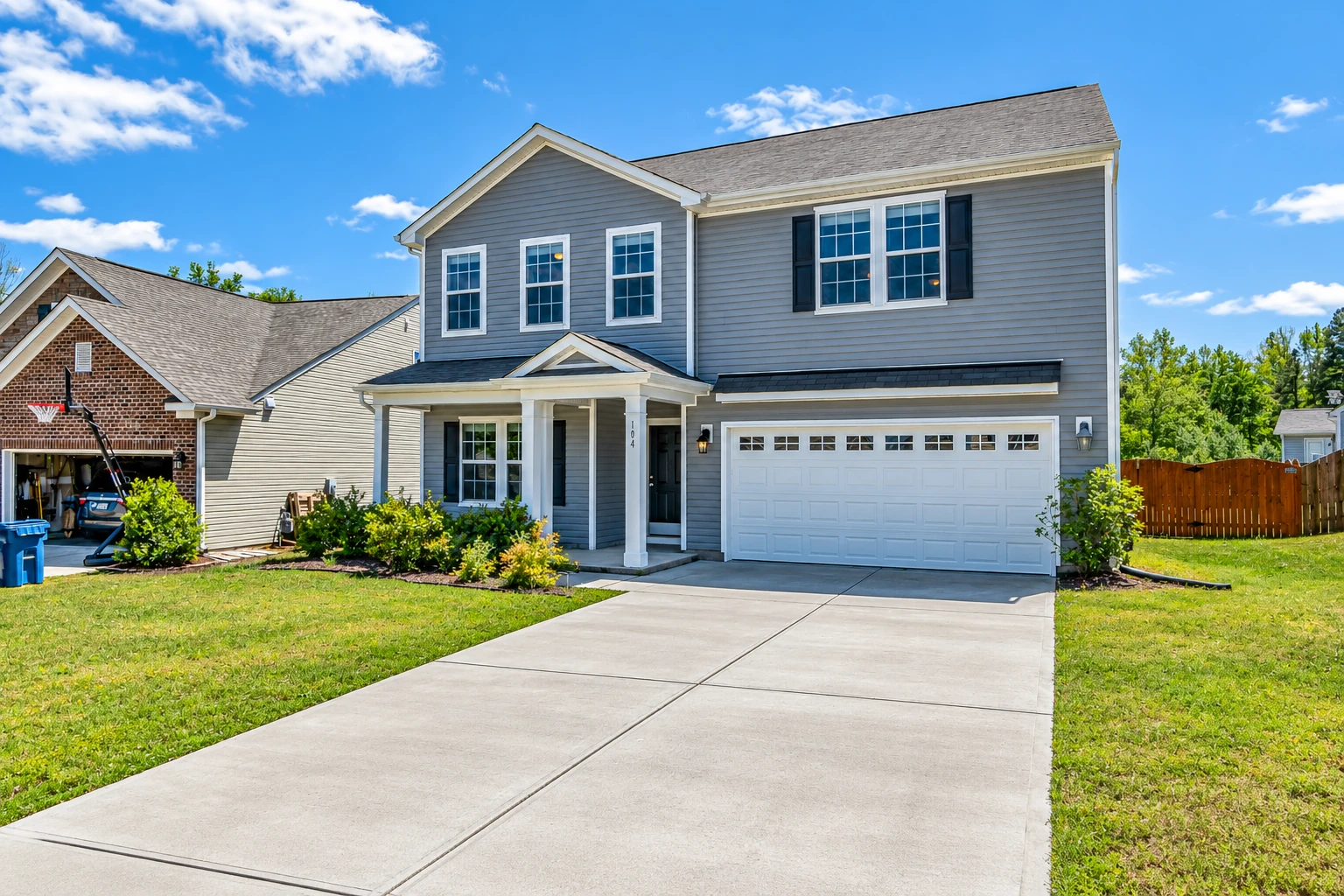
Concrete driveway building in Toledo means tearing out the old driveway if there is one, digging out and packing a solid base, and pouring and finishing a new slab that carries your cars and sends water away from the house. Most of the wait comes after the pour, while the concrete slowly hardens before you can drive on it.
Most calls start with a driveway that has cracked across, sunk at one end or holds water after every rain. The price mostly turns on size, whether an old slab has to come out, how thick it needs to be for what parks there and how much digging the base takes, while the schedule turns on the city's sign-offs, the weather and the wait before you can drive on it. We're licensed and fully insured, and we pull the permits our work needs and check the rules with the city before we start. When you call, I come out, measure the job and write down what's included and what isn't, so you have a number for your own driveway. We're based in Toledo and work across the cities around it in northwest Ohio and southern Michigan.
I come out to look at every driveway, measure it and write down what's included and what isn't, so you can line our number up against anyone else's.
Our crew does the work with me on site, so the person who wrote your estimate is there when the base gets packed and the concrete goes in.
The base disappears on pour day, so it's the first thing people want to cut. I'd rather spend there than on the surface, because a slab stays flat only when what's under it holds.
The first thing I ask is what's going to park on it, since a work truck that sits there every night calls for a different build than two family cars. Then we set the pour date so the new slab has warm weather to cure, the slow hardening concrete does before it's ready to use, before the cold sets in. On the job, our crew breaks out the old driveway if there is one, digs down past the loose dirt and packs the subgrade, the ground and stone the slab sits on, because a base that's only raked level settles and takes the slab with it. We set the forms so water runs away from your house, not toward it, and we pour early in the day, since a slab poured in midday heat can end up with a weak, dusty top. Then we give it a broom finish, a light ridged texture that gives tires and shoes some grip, and cut control joints, shallow grooves that give the slab a place to crack, while the concrete is still young so any cracks follow lines we picked.
A driveway often isn't the only slab on the list. If you'd like a place to sit out back, we can plan concrete patio construction on the same kind of packed base, and if you'd like a border or the whole driveway to look like brick or stone, our stamped concrete services press that pattern into the fresh pour.
Toledo's code has property owners get driveway plans approved by the city before a building permit is issued, so we settle the layout early and it doesn't hold up your pour date.
On a major street or a corner lot, the city's Division of Transportation approves where the curb gets cut for your driveway before anyone applies for the permit, so that comes first on those lots.
In Toledo a driveway is built or rebuilt only after an inspection, with the city giving the line and levels it has to follow, so that visit goes on the calendar ahead of the work.
The city's engineering office gets at least 24 hours' notice before driveway work starts, so once your pour date is firm, that notice goes in and you know when we'll be there.
Send the form and we'll reply within one business day to set up a visit. The estimate is free, done in person at your house and comes with no obligation.
A rough length and width is plenty to start, plus whether an old driveway has to be broken out and hauled away, since both of those move the price.
Let us know if the house sits on a corner or faces a major street, because the curb cut needs the city's approval first and that can move the start.
I'd rather tell you something you don't want to hear at the estimate than have you find it out a year later, and that's how we run the whole job.
Example photos of broom finishes, stamped patterns, borders and driveway layouts to look over before we talk through your own.
Straight answers to what Toledo homeowners ask about driveway cost, permits, timing and how a new slab handles winter.
Unreinforced concrete driveway work in Toledo usually runs about $6 to $10 per square foot, not counting removal of an old driveway, which adds to the per square foot cost of a replacement. Reinforced concrete costs more per square foot. Your written estimate covers your own driveway, so you'll see where your job lands.
Yes. Toledo's permit rules call for a written permit application to the Division of Building Inspection and a Certificate of Zoning Compliance for every residential driveway. Plan approval, the curb cut and the inspection listed above come on top of that, and we take care of the permits our work needs before anyone digs.
Spring, summer and early fall are the best times to pour in Toledo. The Ohio Ready Mixed Concrete Association advises giving a new slab two months above 40°F before hard freezes, about one month to cure and one to dry out. If you're calling in late summer, book early so the slab gets that full stretch.
Usually 3½ to 4 inches for a home driveway. The Ohio association says that's generally enough unless heavy trucks will park on it regularly, and past that a thicker slab is mostly extra material. The association also says wire mesh isn't necessary in home slabs, and synthetic fibers may be used to help control early cracking.
Plan on at least 7 days, which is what an Illinois concrete industry group advises before cars go on new concrete. The slab keeps gaining strength long after it looks hard, so parking on it early can leave marks and cracks you're stuck with. Walking on it comes sooner, and we'll tell you when.
No slab is crack-proof, but a well-built concrete driveway often carries traffic for over 30 years. Entrained air, tiny bubbles in the mix, helps it stand up to freezing, thawing and salt. The Ohio association advises sand instead of deicers the first winter, especially on slabs poured after September 15 that weren't air dried and sealed, and no deicer with ammonium sulfate or nitrate.
Call (419) 392-9683 or use the form, and I'll come look at your driveway and tell you straight what it needs.