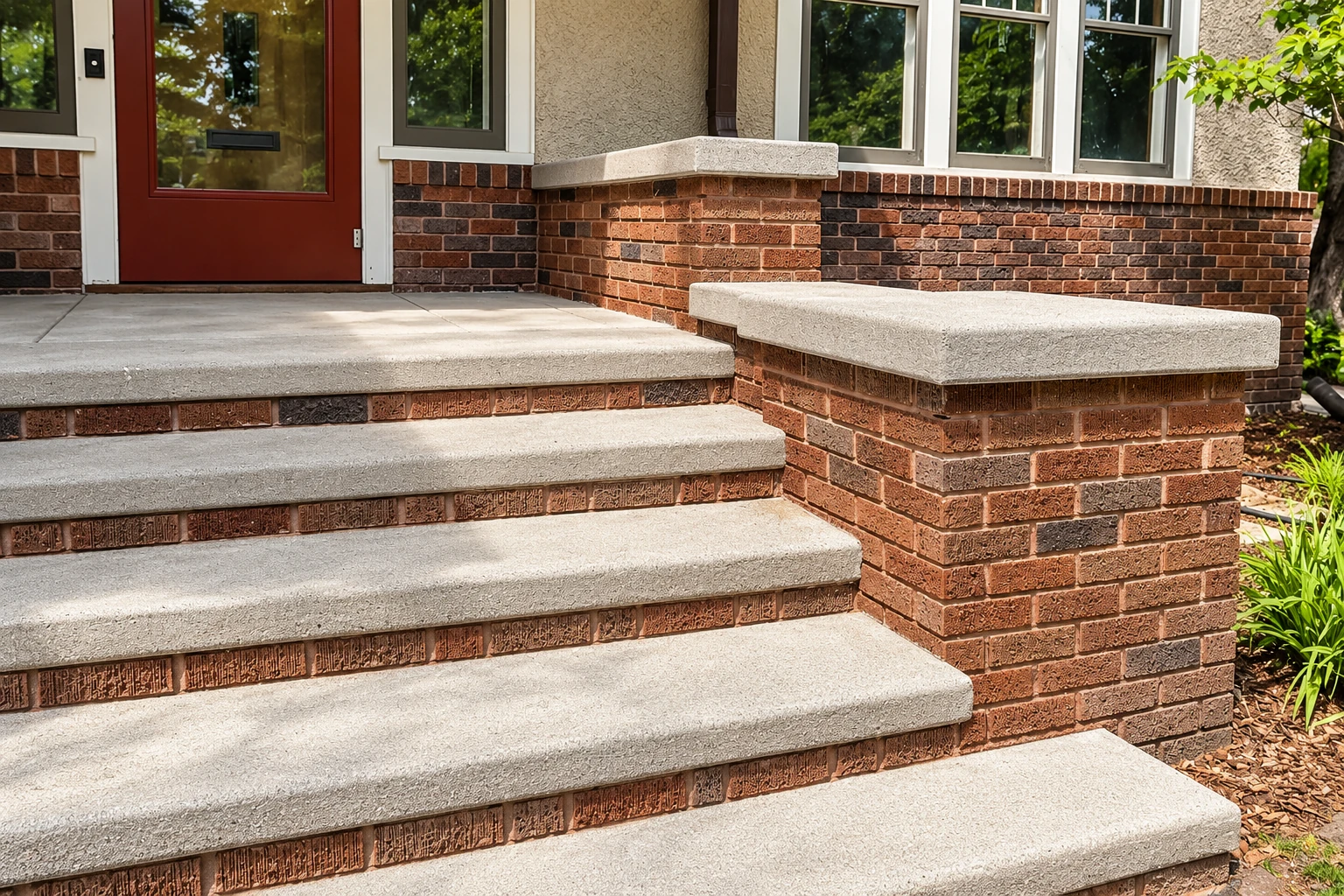
Concrete driveway building
We tear out the old driveway, dig past the soft dirt and pack a gravel base. Then we slope the new slab so water runs off toward the street instead of back at the garage.
Monolith Toledo Concrete is a concrete contractor based in Toledo, and we pour driveways, patios, walks, steps, garage floors and foundations for homeowners and small businesses in Waterville, OH. We also build retaining walls and cut existing concrete.
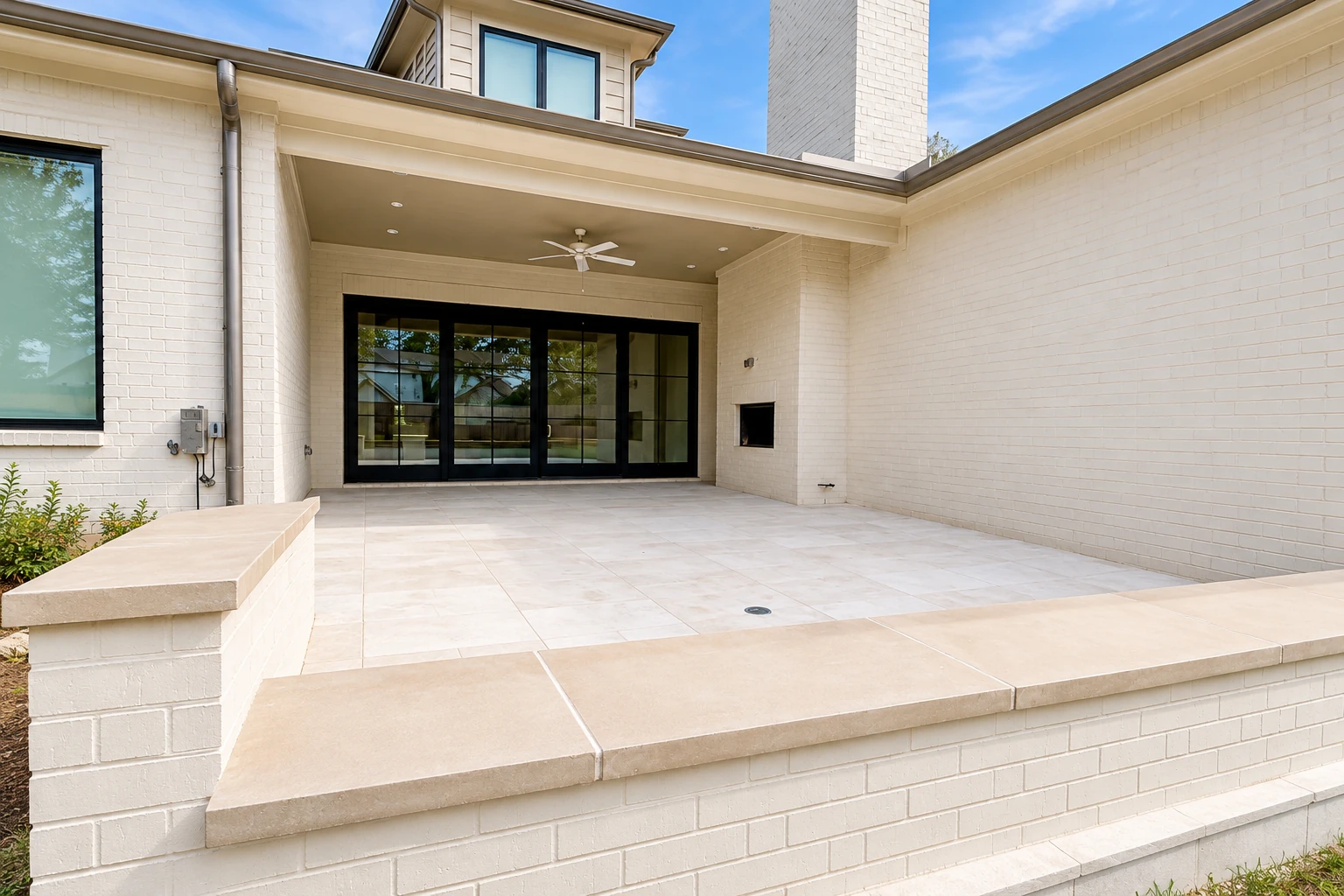
Waterville is an easy drive from our base in Toledo. The calls we get there run from tired front walks and steps on older houses to new driveways and back patios. Around the historic district on River Road, where the historical society has awarded plaques to historic houses, people want new concrete that fits the house instead of fighting it. We do the same work up in Temperance and closer by in Maumee.
The price here moves with the size of the job, how much old concrete has to come out, how far down we dig to reach firm ground and the finish you choose. The schedule mostly turns on permits and a dry stretch to pour. I'll give you your own figure at the estimate, written down with what's in it and what isn't. On most Waterville yards, the part that decides how long a slab lasts is the part you never see. So we dig out the soft dirt and pack a gravel base under the slab, because a slab raked flat over loose soil sinks right along with it.
I come out, walk the job, measure it and write the estimate, and I'm on site with our crew when we pour. That way the person who told you what to expect is there to see it done.
If the budget's tight, I'll tell you to cut the fancy finish before you cut the base. You can redo a surface later, but a slab on a bad base has to come out.
Concrete shrinks as it cures and will crack somewhere. So we cut control joints, grooves that tell the crack where to run, while the slab is young, and that keeps the cracks in straight lines we chose.
We tear out the old driveway, dig past the soft dirt and pack a gravel base. Then we slope the new slab so water runs off toward the street instead of back at the garage.
Back patios often sit right against the house. So we pitch the slab away from the foundation and check where the yard drains before we set a single form.
We press a pattern and color into the fresh slab, which suits older houses where plain gray would look out of place. The base underneath still matters most.
We break out heaved sections of front walks and side paths and replace them. We finish them with a broom finish, a light brushed texture that keeps feet from slipping when it's wet.
We break out cracked or sunken garage floors and pour a new slab thick enough to carry a car, with rebar, the steel that holds it together, where the load calls for it.
We do colored, scored and exposed-stone finishes for walks, patios and entries. We pick them at the estimate, so you see samples next to your siding and trim before anything is poured.
We pour walls for sloped yards and drop-offs, set on a proper footing with drainage behind them. Water trapped behind a wall is what slowly pushes it over.
We pour interior slabs for basements, shops and additions and finish them smooth or brushed. The finish depends on what the floor will carry and what goes on top of it.
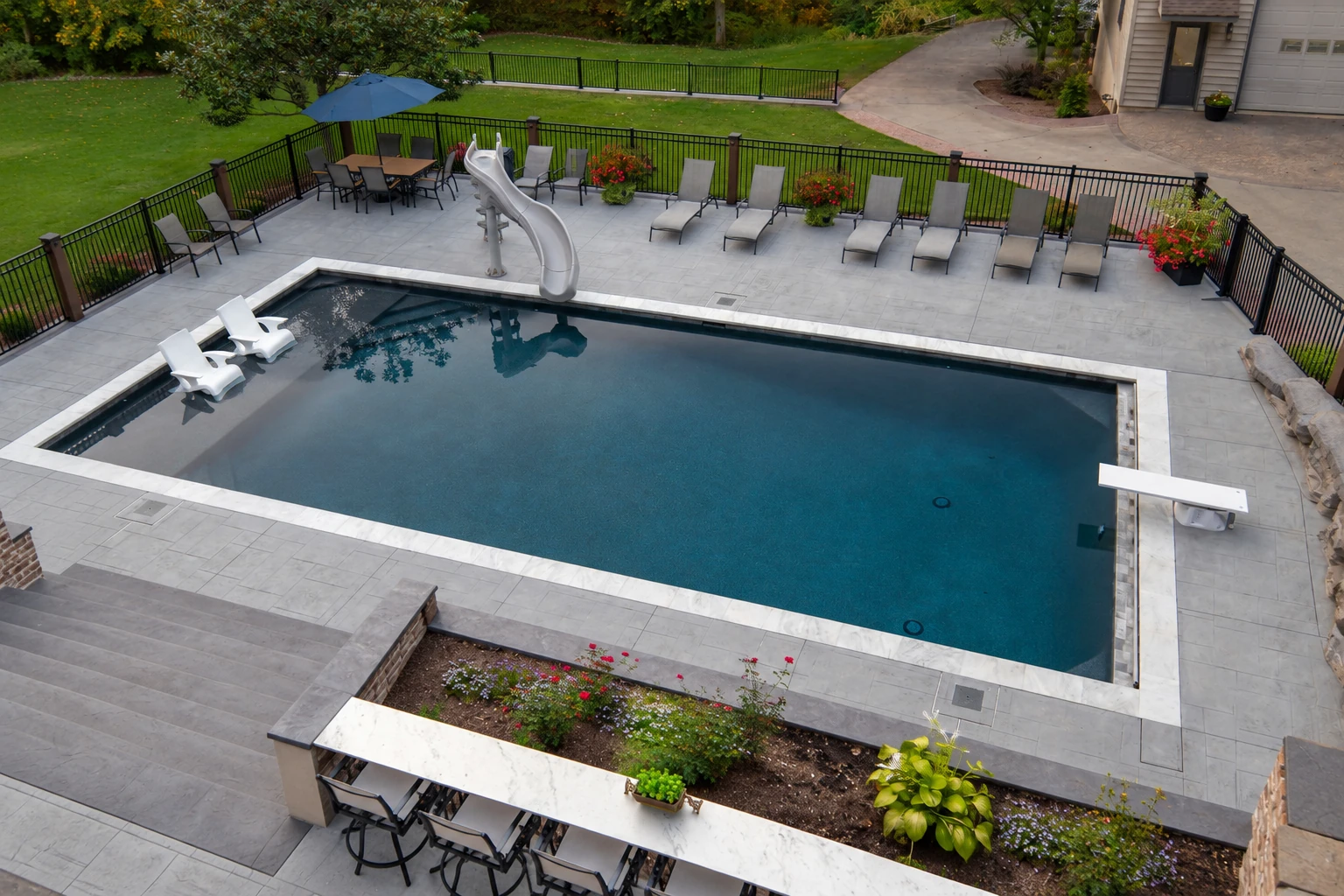
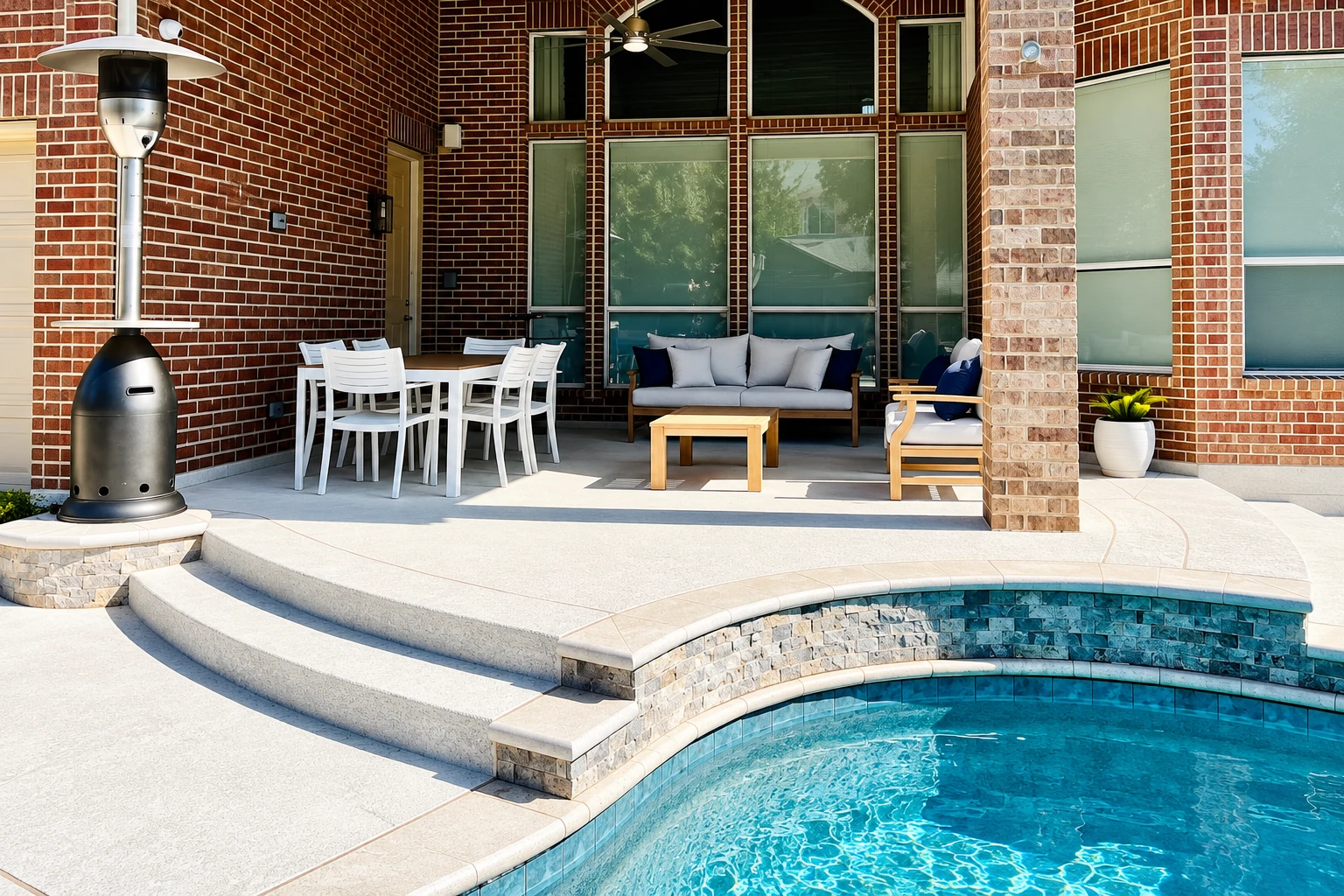
We build decks around in-ground pools with a textured finish that grips wet feet. We plan the slope and joints so splash water drains away from the pool and the house.
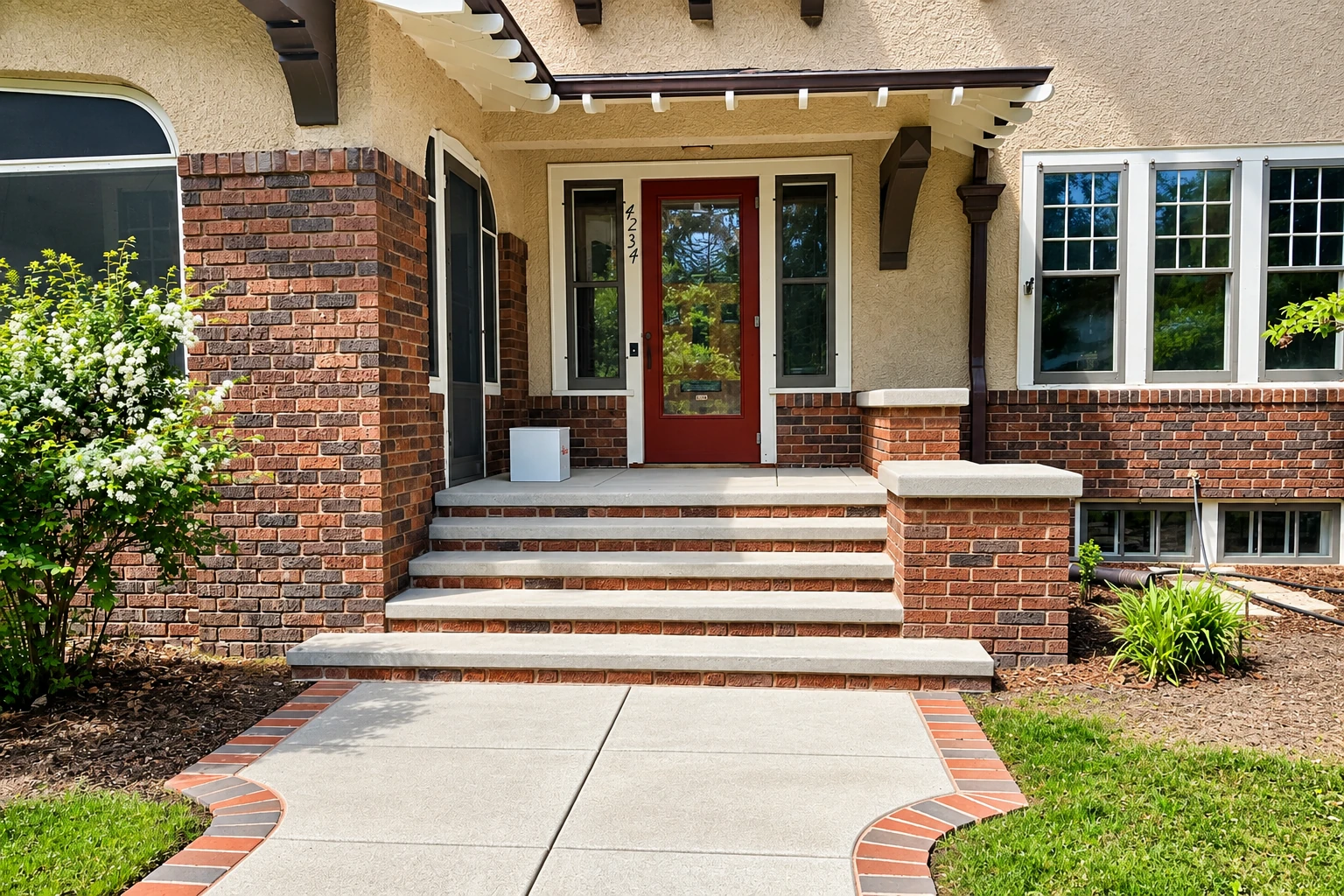
We form front and back steps with even risers so nobody trips. That matters on older houses, where the old steps have often settled and pulled away from the porch.
We pour slabs for garages, additions and outbuildings, dug and packed to firm ground before the pour. Everything built on top depends on that slab staying put.
We build foundations for additions and new structures, with footings and walls laid out to the plans and the permit. Our crew stays on site from layout to the last pour.
We pour lots and drive aisles for small businesses, thicker for heavier traffic and pitched to drain. We lay out the joints so the cracks land where we planned them.
We pour footings for decks, porches, garages and additions, dug to the depth the plans call for, so the weight of the structure rests on solid ground.
When a slab or foundation has sunk, we lift it back toward level. I'll tell you at the estimate if replacing it makes more sense for the ground it sits on.
We make clean saw cuts through slabs, walls and driveways for new openings and utility trenches. We can also take out one bad section without tearing out the rest.
Send the form and we'll reply within one business day to set a time. I'll come out, walk and measure the job and write down what's included and what isn't, with no obligation.
I measure the actual job instead of guessing from photos. The ground, the slope and the old concrete coming out all change what the work involves.
You get what's included and what isn't in writing. You can compare us fairly with another bid, and nothing comes as a surprise later.
We're licensed and fully insured, and our work is backed by our satisfaction guarantee, so you know who stands behind the slab once the crew packs up.
Waterville splits the permit work between the city and Lucas County, so here's who handles what before a slab goes in.
The Lucas County Building Regulations Department issues building permits in Waterville once the city has given its zoning permit for putting up or changing a building. The county covers new construction, additions, alterations, repairs and replacements, so a slab foundation or footings usually goes through both offices. If you're unsure, the county invites calls at (419) 213-2990, weekdays 8 a.m. to 4 p.m.
Ask the city first, because Waterville's zoning forms include a sidewalk and driveway permit. The City Zoning Inspector answers at 419.878.8100 or townhall@waterville.org. Owners or contractors can get applications online or at the municipal building. We check with the city before we start, so you know what's been filed and who's involved.
The county doesn't require a building permit for a detached residential structure under 200 square feet. The city still requires a zoning permit to put up any building, though. Waterville also lists shed specifications among its forms, so it's worth a call to the zoning inspector before we pour the pad.
These are the cities with their own page on our site, and we work in others around Toledo too. Call or send the form to ask about your address.
We're open evenings and weekends, so call (419) 392-9683 or send the form when it suits you, and we'll plan the job and its permits.